Engaged Learning

Engaged Learning at Saint Mary’s College
Saint Mary’s College of California has been recognized by the American Council on Education and the Carnegie Foundation for the Advancement of Teaching with the 2024 Carnegie Elective Classification for Community Engagement for our high-quality EL courses and programs, and deep, institutional commitment to service with the community.
We first received our first Carnegie Classification in 2015. We received our reclassification in our first year of eligibility in 2024, which is valid until 2032.

According to the Carnegie Foundation...
"Community engagement describes collaboration between institutions of higher education and their larger communities (local, regional/state, national, global) for the mutually beneficial exchange of knowledge and resources in a context of partnership and reciprocity. The purpose of community engagement is the partnership of college and university knowledge and resources with those of the public and private sectors to enrich scholarship, research, and creative activity; enhance curriculum, teaching, and learning; prepare educated, engaged citizens; strengthen democratic values and civic responsibility; address critical societal issues; and contribute to the public good.”

Saint Mary's College of California is a proud member of Uniservitate. The Uniservitate network aims to generate a systemic change in Catholic Higher Education Institutions (CHEIs), through the institutionalization of Service-Learning (SL) as a tool to fulfill their mission of an integral education, to generate agents for social change who critically engage for a better society according to the social teaching of the Church.
Program Overview
Explore the sections below to learn more about this Core requirement, the learning goals associated with this requirement, and the learning outcomes of the program as a whole.
For more details about EL policies and opportunities, browse the many frequently asked questions listed at the bottom.
Engaged Learning Graduation Requirement
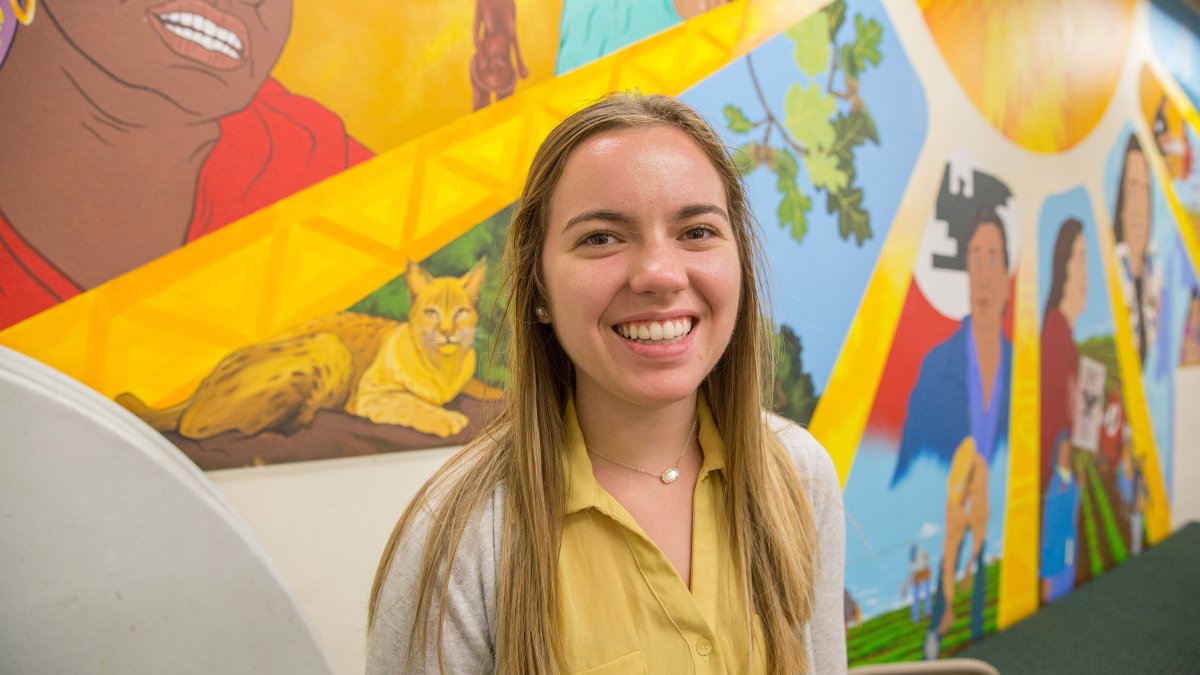
At Saint Mary’s College of California, we use the term engaged learning (EL) to define our community engagement work for the EL graduation requirement. EL is an important aspect of Lasallian education. It provides students with opportunities to apply their academic knowledge and skills to serve a community and to learn in partnership with its members.
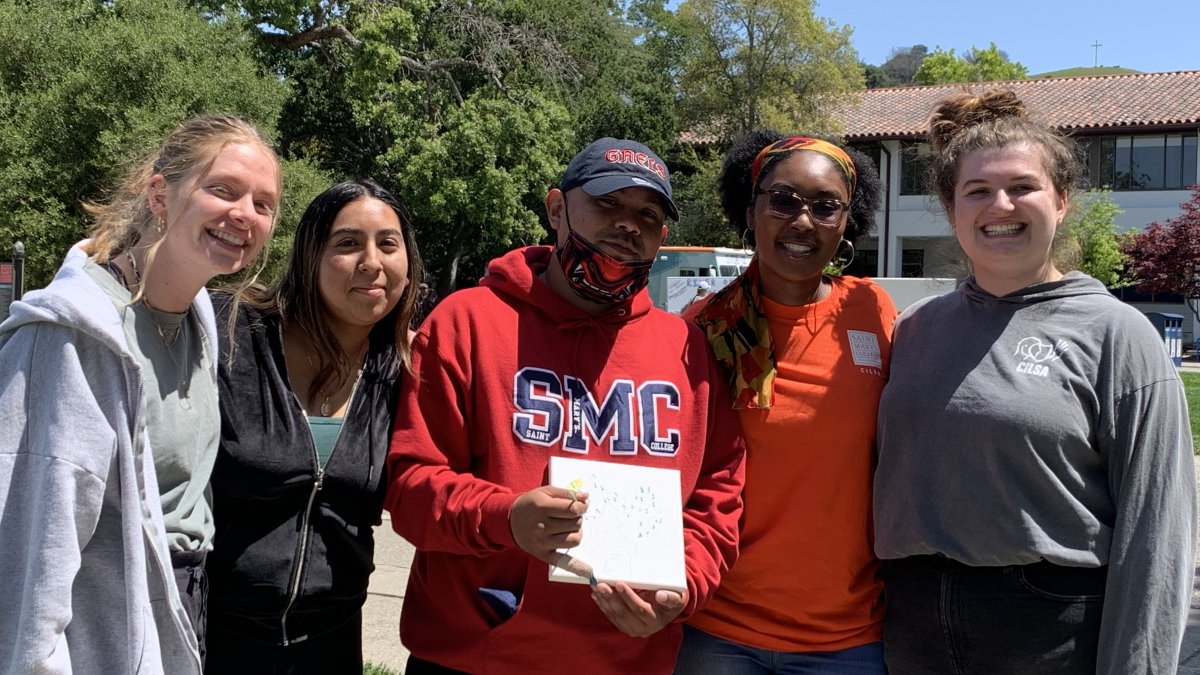
We offer approximately 50 EL courses a year in disciplines across campus. EL faculty often collaborate with the same community partners each time they teach an EL course to deepen partnerships and build upon previous courses’ service work. Students complete 20 hours of service in the community and reflect on their experiences as they relate to their coursework. According to Donahue and Plaxton-Moore (2018), “critical reflection is an internal mental process of actively interrogating your own values, beliefs, and assumptions in light of new information acquired through formal and informal education, direct experience, and discourse” (p. 35).
EL Learning Goal
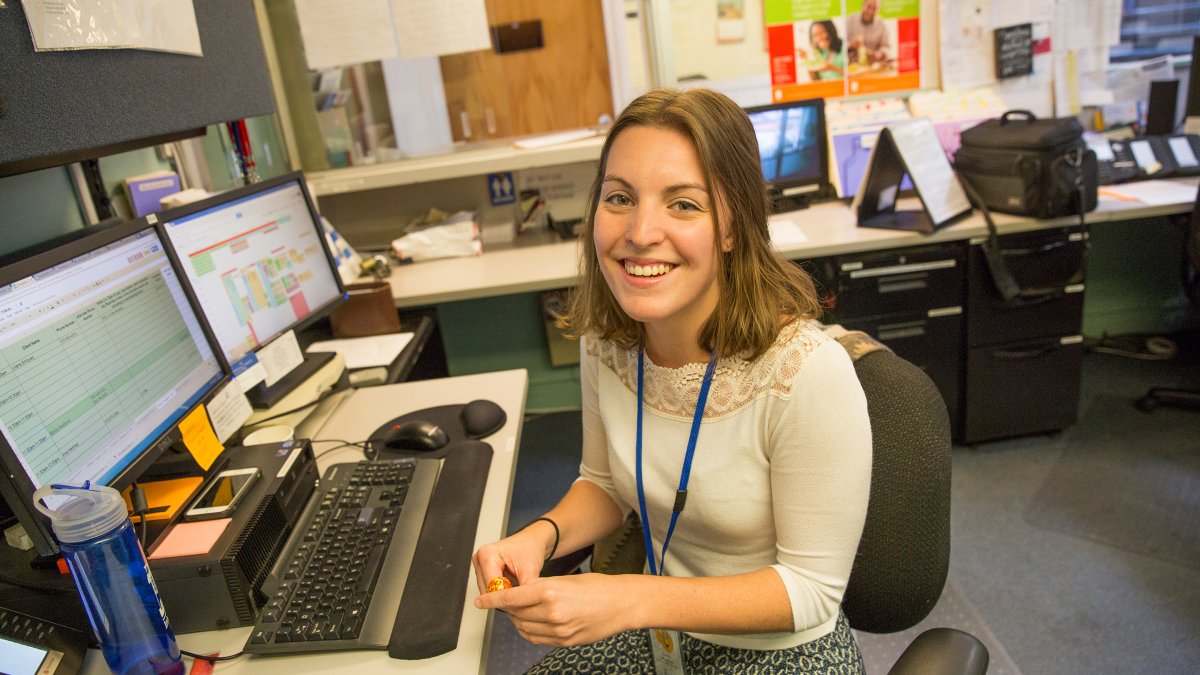
Students will experientially learn to put academic content to practice while working collaboratively with their community partners. Students will also consider the immediate or long-term impact of their work on themselves, the community partner, and society more broadly.
EL Learning Outcomes
The following learning outcomes will be used for course designation and assessment of student learning. Students will…
- Apply academic methods, theories, or disciplinary knowledge outside of the classroom in ways that brings mutual benefits to the learner and a community partner; and
- Reflect critically and iteratively on the engagement work, including the direct or indirect impact of the work on the learner, the community partner, and society.
Student FAQs
Here are common questions about the EL graduation requirement. If you have additional questions, contact EL Director Sarah Beth Dempsey (sdd4@stmarys-ca.edu).
Students most commonly fulfill the EL graduation requirement by completing an EL course. They can also fulfill the EL requirement by completing EL-designated programs (e.g., CILSA’s BAY Collaborative), internships (e.g., CORE 451: EL Internships), as well as EL-designated summer research programs and independent study courses.
We usually offer about 15-20 EL courses in the fall semester and 25-30 EL courses in the spring semester. In January, we usually offer the Lasallian Service Internship (LSI) and a few Jan Term EL courses, including travel courses. At this time, we do not offer summer EL courses. Check GaelXpress for this semester’s course offerings.
This is the current list of designated EL courses:
- AH 388: Art History Applied Research: Community
- BSAN 325 and BSAN 325EL: Project Management
- CHEM 319: Applied Chemistry
- CHEM 356 and CHEM 356EL: Chemistry Outreach
- COMM 461: Communication and Social Justice
- CORE 260: Lasallian Principles in Practice
- CORE 450: Community Engagement Reflection
- CORE 451: Engaged Learning Internship
- CORE 452: Solidarity Through Service
- CORE 463: BAY Collaborative
- ENGL 366: Public History Narrative
- ES 201EL: Creating Community
- HIST 252: Modern Medievalisms
- HIST 301EL: History Mentors
- HIST 302EL: Public History
- ITAL 301: Advanced Italian
- JAPAN 301: Advanced Japanese
- JCL 201EL: Introduction to Community Engagement
- JCL 350EL: Advanced Leadership: Engaged Learning
- KINES 220 and KINES 220 EL: Introduction to Sports Management
- KINES 240 and KINES 240EL: Introduction to Health Promotions
- LDSH 409: Leadership Project
- LEAP 308: Advanced Writing and Research
- MATH 201: Math Games
- MKT 326 and MKT 326EL: Applied Marketing Research
- ORB 333 and ORB 333EL: Interfaith Leadership
- POL 310 and POL 310EL: Politics and Race
- POL 321: Gender Politics
- POL 346 and POL 346EL: Food Politics
- PSYCH 331 and PSYCH 331EL: Cross-Cultural Psychology
- PSYCH 342 and PSYCH 342EL: Middle Childhood
- PSYCH 403 and PSYCH 403EL: Field Placement
- SMC 220: Living Lasallian
- SMC 305 and SMC 305EL: Peer Mentoring in the School of Science
- SOC 432 and SOC 432EL: Sociological Research Methods
- TED 200 and TED 200EL: Introduction to Teaching Professional Field Practice
- TED 228 and TED 228EL: Education for a More Just World
- TRS 306 and TRS 306EL: The Bible and Economic Justice
- TRS 341: Christian Ethics
- TRS 343: Catholic Social Teaching
- TRS 334 and TRS 334EL: Our Lady of Guadalupe
- WRIT 400 and WRIT 400EL: Writing for Nonprofits
You can fulfill the EL requirement anytime during your undergraduate years at SMC, though some courses and experiences may have pre-requisites. Talk with your advisor about which EL course and semester is best for you. Be mindful that EL requires a minimum 20 hours of service and some courses have off-campus community partners, so you need to factor commute time into your schedule.
Maybe. Not all majors offer an EL course. Talk to your advisor and create a plan for when you will take an EL course and check to see if it also fulfills any major or minor requirements.
Faculty select community partners and service projects that relate directly to their course topics. Sometimes they have multiple community partners and you can select from their list of partners, but you do not get to select your own partner outside of the ones identified for the course.
That’s okay. Talk with your professor and classmates about it. We strongly encourage everyone to carpool and/or take public transportation. Most community partners are nonprofit organizations and school districts located within 15 miles of SMC.
Yes, the College will reimburse you for those expenses. Some community partners, usually schools or nonprofit organizations working with youth, require background checks and TB tests. If you drive or take public transportation to your service sites, we will reimburse you for mileage and BART/bus fare. We will provide reimbursement information and instructions in class.
Faculty FAQs
There are many components to EL courses, and the course design and community partnerships require advanced planning. Contact EL Director Sarah Beth Dempsey (sdd4@stmarys-ca.edu) to discuss new and existing EL courses.
It’s wonderful that you want to teach an EL course! Schedule a meeting with EL Director Dempsey to discuss your course ideas and possible community partners. If you are new to teaching EL courses, you need to complete the EL faculty formation (training). If this is a new course, you need to go through the course approval process at least one semester before you intend to teach the course and complete EL formation.
At this time, faculty formation is still offered as individual training sessions. A cohort formation model is in development and the schedule will be posted in fall 2025. Schedule a formation session with EL Director Dempsey.
A community partner is a co-educator for your course and will provide a hands-on learning experience for your students outside the classroom. “Community” is broadly defined at Saint Mary’s and includes both off- and on-campus partners. Faculty collaborate with nonprofit organizations, K-12 schools, and SMC departments and programs. Faculty and community partners co-create mutually-beneficial service experiences that directly relate to the course topic and are fully integrated with the course.
Here are some recent community partners:
Image
| Arm of Care |
Image

| Catholic Charities of the East Bay |
Image

| De Marillac Academy |
Image

| Food Bank of Contra Costa and Solano |
Image

| Girls Inc. of the Island City |
Image

| Hope Solutions |
Image

| Monument Crisis Center |
Image

| Multicultural Institute |
Image

| Oakland Public Education Fund |
Image

| San Ramon Valley Unified School District |
Image

| St. Mary's Center |
Contact EL Director Dempsey to discuss community partnerships.
We try to plan everything at least a semester in advance. Even if your partnership isn’t finalized, it is helpful to identify community partners before the advising period/course registration so students know if they will have on- or off-campus partnerships and can plan their service and travel around their other commitments.
Yes, the College requires different forms for EL courses based on off- and on-campus community partners (more links coming soon). Contact EL Director Dempsey to be certain you have the correct forms for your course.
This Engaged Learning Partnership Statement outlines the student, community partner, faculty, and College responsibilities for EL partnerships.
Faculty:
- Course Agreement Form
- Memorandum of Understanding (MOU) or Risk Assessment Form
Students:
- Student Risk and Liability Waiver (off-campus service)
- Motor Vehicle Report (off-campus service)
Yes! There are fantastic organizations in the area of community engagement. Here are a few recommendations:
Yes! We encourage it. Here are some recommended journals:
- Coalition of Urban and Metropolitan Universities
- International Journal of Research on Service-Learning and Community Engagement (IJRSLCE)
- Journal of Catholic Higher Education
- Journal of Community Engagement and Scholarship
- Journal of Higher Education Outreach and Engagement
- Journal of Service-Learning and Higher Education
- Michigan Journal of Community Service Learning
- The Journal of Community Engagement and Higher Education
- The Journal of Experiential Education
Some of our colleagues have recently published on their community engagement work:
- Bachofer, S., & Cass, M. (2022). A Community Outreach Chemistry Lab Success in a Pandemic. Science Education and Civic Engagement, 14(1), 39-44. (Electronic journal article)
- Fitzgerald, M., & Spencer, T. (2021). Centering justice, community and leadership in teacher education. AILACTE Journal. (Electronic journal article)
- Dempsey, S. B., & Besson, W. T. (2025). Online Community Engagement During the COVID-19 Pandemic: Was It Still a Mutually-Beneficial Experience?. Community Engagement and the COVID-19 Pandemic: Affordances and Challenges of Service Learning in Crisis, 12(3), 87.
- Dempsey, S.B. (2023). Community Engagement: A Retrospective Learning Experience During the COVID-19 Pandemic. International Journal on Research on Service-Learning and Community Engagement, 11(1). Article 4. https://doi.org/10.37333/001c.92027
- Dao, L.T., Dempsey, S.B., Giacoman, T. (2023). Making Community Engagement Meaningful: Student & Community Partner Perspectives. In A.G. Guevara & C. Vincent, (Eds.), Anti-Racist Community Engagement: Principles and Practices. Boston, MA: Campus Compact and Stylus Publishing.
The Engaged Learning Framing Statement provides history and context of EL at Saint Mary’s, and an explanation of faculty community-based work. The purpose of this document is to provide support to R&T candidates and provide additional EL information to departments, deans, and R&T committee members.
Community Partner FAQs
We value our collaborations with community partners. We view you as co-educators and appreciate your time and expertise. Contact EL Director Sarah Beth Dempsey (sdd4@stmarys-ca.edu) to discuss partnership opportunities.
Contact EL Director Dempsey to learn more about different opportunities for partnership. She will connect you with faculty who are looking for co-educators in the community.
You can partner with as many faculty and courses as you have the capacity to collaborate with in order to support the student learning experience.
No, you can partner whenever it works for you and when you have the capacity to support students.
Community partners and faculty co-create the service projects. You can also decide the service schedule, number of students at your site, methods of communication, etc. You are the expert in the field and we turn to you for guidance and leadership as our co-educator in the community.
Yes, students can complete training sessions, TB tests, background checks, and anything else you might require for service at your site. Be certain to communicate the requirements, timeline, and possible fees (ex., LiveScans) to faculty and students.
No, you do not have to pay anything.
No, you will not be compensated for hosting students. We do have community partner events so stay tuned for announcements about professional development and networking opportunities on campus.
Questions about Engaged Learning (EL)?
Contact:
Dr. Sarah Beth Dempsey (she/her)
Director of Engaged Learning
sdd4@stmarys-ca.edu