
Detail of Hilda Robinson (1928–2023) Mandela, 1991, oil pastel on paper, Courtesy of the Bishop family
Three Spring Exhibitions at Saint Mary’s College Museum of Art (SMCMoA): Artists Hilda Robinson and Beth Van Hoesen, and a Collaborative Commission with Printmaker Zach Clark
The exhibits highlight the legacies of two Bay Area women artists. And the commissioned project showcases the campus landscape and student voices. Celebrate all exhibitions at an opening reception on February 12.
This spring, the Saint Mary’s College Museum of Art (SMCMoA) presents three exhibitions highlighting the distinctive stories and practices of Bay Area artists from past to present. Hilda Robinson: Retrospective features large-scale oil pastels that compile memory, character, and movement, expressing Black American joy from the 1980s through the early 2020s. Beth Van Hoesen: Felt Through Line traces the refined observations of the San Francisco–based draftswoman and printmaker across her career from the 1950s through the 1980s. Walking The Quiet: A Collaborative Commission by Zach Clark presents SMCMoA’s 2025 student-selected commission. The printed work explores the College’s landscape and sites through the interpretive perspectives of students and community members working alongside a contemporary artist.
The opening reception for the exhibitions will be held at the museum on February 12 from 5 to 7 p.m., with opening remarks at 5:30 p.m. The exhibitions will be on view from February 11 through June 21, 2026.
Hilda Robinson: Retrospective
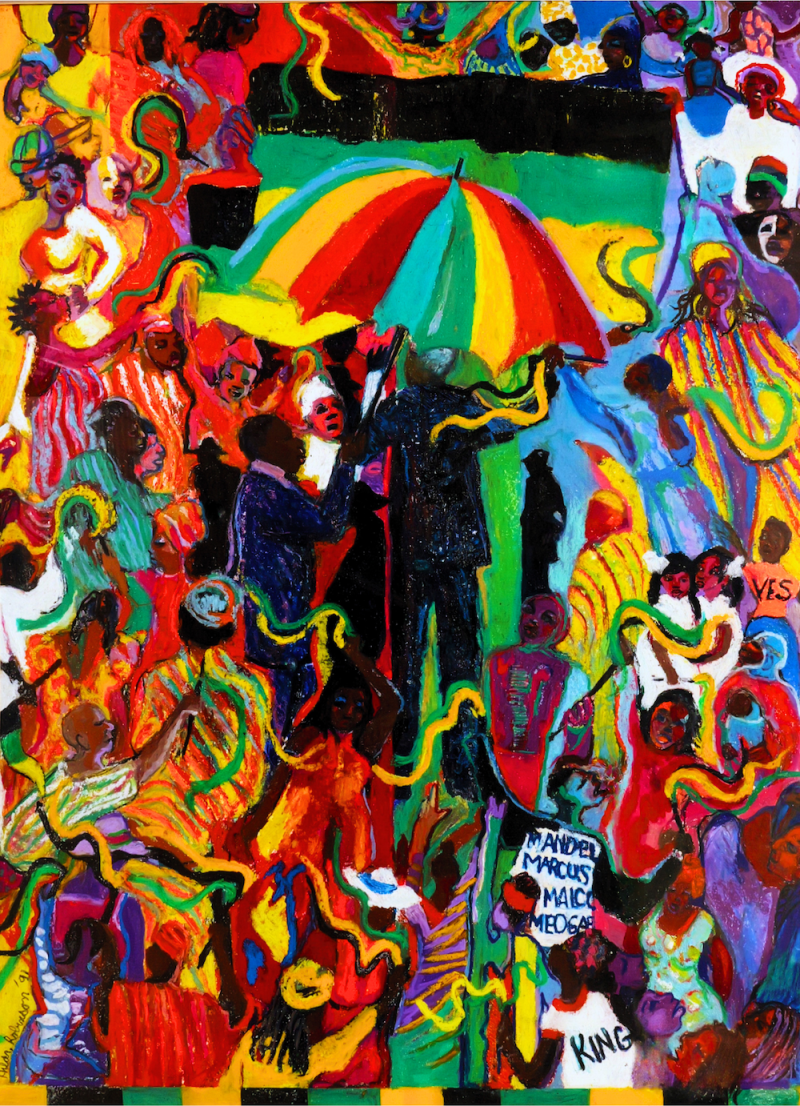
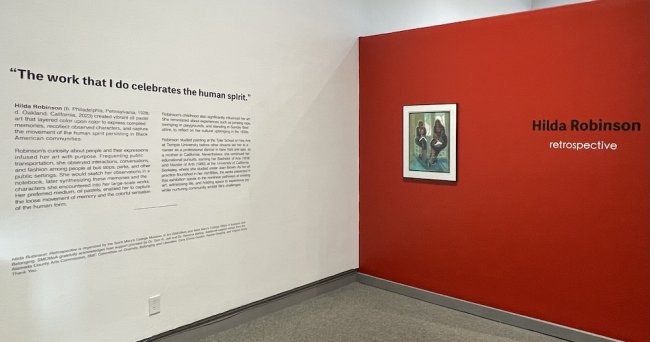
Hilda Robinson: Retrospective features 20 oil pastel works created between the 1980s and the early 2020s by Oakland-based artist Hilda Robinson (1928–2023). Among the first exhibitions since the artist’s passing, the retrospective invites viewers into Robinson’s colorful, large-scale compositions that radiate joy and community.
Produced in her later years, this body of work reflects Robinson’s sustained observation of people, community, and character as they move through shared public spaces. Central to the exhibition is Robinson’s engagement with the concept of the third place—parks, stoops, cafés, transit stations, and other forms of social infrastructure that foster informal exchange and collective belonging.
Often observing people on public transportation, Robinson was intrigued by how clothing expresses identity and evokes memories. For Robinson, clothing acts as a visual moniker, enabling time to collapse. Several of her works depict children flying kites or skipping rope in white dresses with sashes, a nod to her own childhood in 1920s Philadelphia. Robinson renders the figural form within these environments, sharing them as sites of resilience, joy, and continuity. Her work underscores the vital role such spaces play in sustaining intergenerational knowledge and communal care.
Robinson’s deliberate choice of oil pastel—a medium composed of pigment mixed with non-drying mineral oil and a wax binder—enabled her to produce vibrant, opaque, and highly expressive surfaces. She first gravitated toward oil pastels while studying under Joan Brown at the University of California, Berkeley, where Brown’s emphasis on color-on-color relationships and the modulation of light and dark strongly informed Robinson’s expressionistic approach. Through this medium, Robinson offers affirmative representations of people across generations, celebrating joy, resistance, and shared experience within Black communal spaces.
Hilda Robinson offers affirmative representations of people across generations, celebrating joy, resistance, and shared experience within Black communal spaces.
Robinson’s legacy lives on beyond her artwork. Associate Vice President Terri R. Jett, who leads the Office of Inclusion and Belonging, states, “The opportunity to both hear from the brilliant educator Dr. Ramona Bishop and, at the same time, have an exhibition of the late Mrs. Hilda Robinson’'s beautiful art (the mother of Dr. Bishop) is quite an honor for Saint Mary’s College. I am proud of the partnership of my Office of Inclusion and Belonging and the Art Museum and hope that people throughout the Bay Area and beyond will come to our campus to take note of the extraordinary collection of works which will be displayed in the first two galleries. Additionally, Saint Mary’s College is thankful for our connection to Elite Public Schools, of which Dr. Bishop is one of the founders, and from where we have a few of their remarkable students pursuing their college education with us. We welcome everyone to the talk, the exhibit, which will run through June, and to simply enjoy learning more about our Lasallian Catholic campus.”
The exhibition is organized by the Saint Mary’s College Museum of Art (SMCMoA) in collaboration with the Saint Mary’s College Office of Inclusion and Belonging. SMCMoA gratefully acknowledges lead support provided by Terri R. Jett and Ramona Bishop. Additional support comes from the Alameda County Arts Commission; SMC Committee on Diversity, Belonging, and Liberation; Coco Guston; Rachel Osajima; and Virginia Smyly. An artist talk with Robinson’s daughter, Ramona Bishop, will take place on February 12 at 3:30 p.m. in the Moraga Room of the Soda Activity Center. This program is free and open to the public.
About Hilda C. Robinson
b. Philadelphia, Pennsylvania, 1928 | d. Oakland, California, 2023
Born in Philadelphia, Robinson studied painting at the Tyler School of Fine Arts at Temple University before pursuing a career as a professional dancer in New York, and later completed her BA (1978) and MA (1980) in art at the University of California, Berkeley.
Robinson’s artwork has been nationally recognized, with exhibitions at J. Latham Gallery in New York City, and a solo show at Art Vision in South Bend, Indiana. Her diverse portfolio is now held in both private and public collections across the United States. Notably, her works are well represented in the Alameda County Arts Commission’s Public Art Collection and were recently showcased at The de Young Museum Open 2023.
Beth Van Hoesen: Felt Through Line
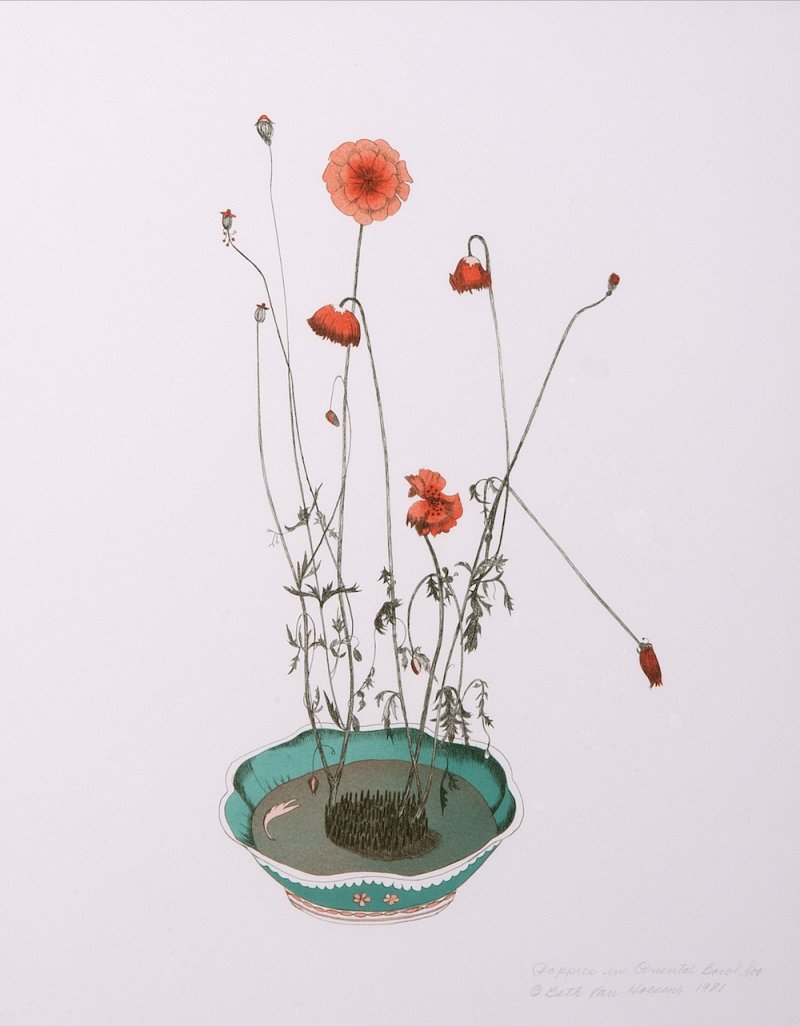
Beth Van Hoesen: Felt Through Line presents a compelling survey of the keen observations and intimate portraits created by San Francisco printmaker and artist Beth Van Hoesen (1926–2010). Featuring over 40 works on paper recently gifted by the E. Mark Adams and Beth Van Hoesen Adams Trust, the exhibition includes preliminary drawings and intaglio prints. Created from the 1950s through the 1980s, the work in Felt Through Line highlights the technical skill and empathetic observation that infused Van Hoesen’s art practice.
Van Hoesen pared down lines in her still lifes and portraits to emphasize her subjects’ character and individuality. At a time when large-scale abstract art dominated the post-WWII art scene, her focus on technical skill, meticulous observation, and keen study of everyday wonders offered an alternative means of exploring universal meaning.
Van Hoesen married artist Mark Adams in 1952 and moved into a remodeled Noe Valley firehouse, where they hosted weekly life-drawing sessions. Van Hoesen’s active role in the San Francisco art community centered on practice, observation, and precision. Her work documented and supported women artists in both their art practice and the preservation of their legacy. Featured in the exhibition is a print of “Ruth’s Faces,” which depicts the ceramic cast masks by Van Hoesen’s friend, Ruth Awasa. Such works emphasize the collective exchange of ideas and the sense of community that dominated San Francisco’s art scene.
Beth Van Hoesen’s active role in the San Francisco art community centered on practice, observation, and precision.
“Beth Van Hoesen and Mark Adams held a vital presence in shaping San Francisco in the post-WWII art community,” notes Lauren MacDonald, who serves as Executive Director of the Museum of Art and Dean of Academic Resources. “Their impact extends through how they created work and cultivated care for the city. It’s an honor to receive this gift of work from the E. Mark Adams and Beth Van Hoesen Adams Trust. The total gift includes over 100 works by Van Hoesen and Adams, significantly enhancing the representation of San Francisco artists and building on our commitment to increasing the presence of women artists in our permanent collection.”
About Beth Van Hoesen
b. Boise, Idaho, 1926 | d. San Francisco, California, 2010
Beth Van Hoesen studied art at Escuela de Pintura y Escultura de la Escuela Esmeralda in Mexico City and at the California School of Fine Arts in San Francisco in the mid-1940s, while a student at Stanford University. Following completion of her Bachelor of Arts degree in 1948, she studied at the École des Beaux-Arts de Fontainebleau in 1948 and at the Académie Julian and Académie de la Grande Chaumière in Paris from 1948 to 1950. Upon returning to the San Francisco Bay Area, she re-enrolled in a Master of Arts program at the California School of Fine Arts, studying under Clyfford Still. Van Hoesen and her artist husband, Mark Adams, purchased a firehouse in 1910 and converted the space into a studio and home. Beginning in 1956, Van Hoesen worked exclusively in printmaking. She received the Award of Honor in Graphics from the San Francisco Arts Commission in 1981 and the Distinguished Artists Award in 1993 from the California Society of Printmakers. Her work has been exhibited internationally and is represented in the collections of the Achenbach Foundation for Graphic Arts, Brooklyn Museum, Art Institute of Chicago, Museum of Modern Art, New York, Norton Simon Museum, Racine Art Museum, San Francisco Museum of Modern Art, Smithsonian American Art Museum, and the Victoria and Albert Museum. The Portland Art Museum (Oregon) houses Beth Van Hoesen’s print archive.
Walking The Quiet: A Collaborative Commission by Zach Clark
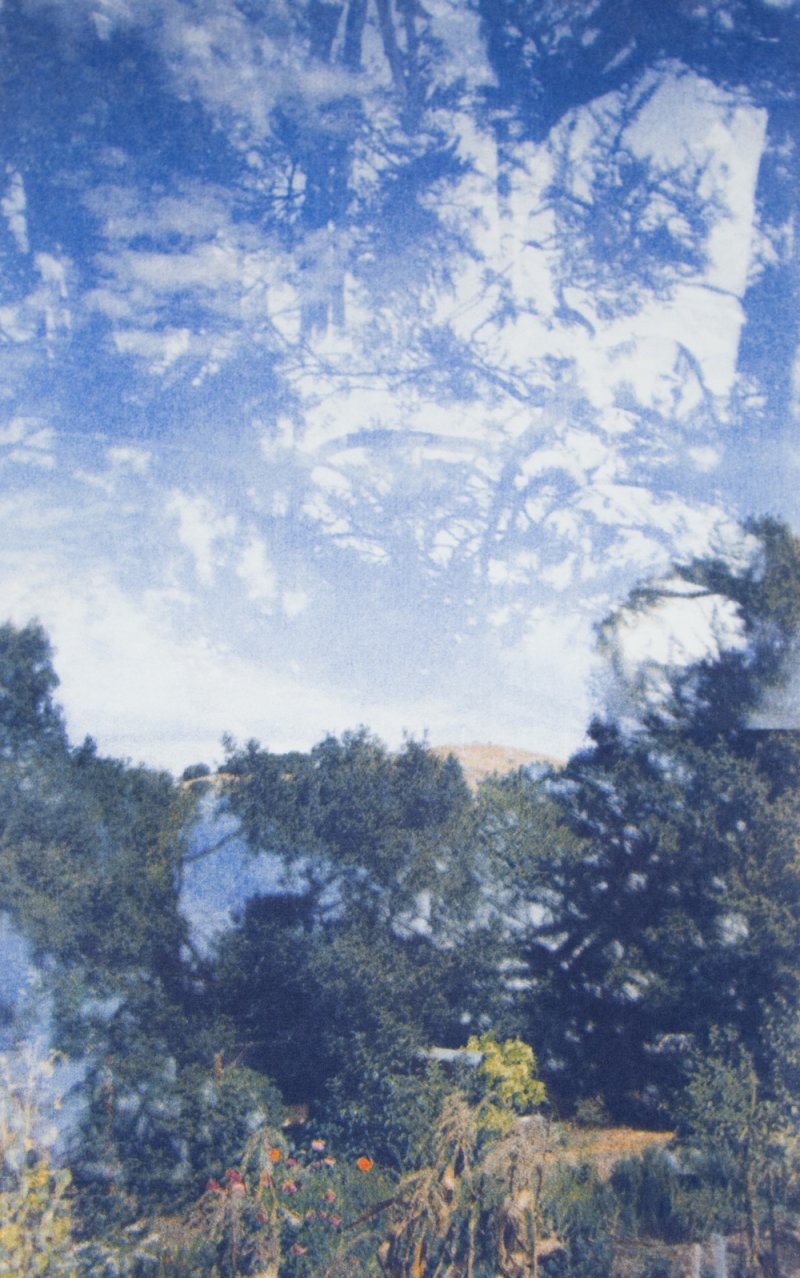
Walking The Quiet: A Collaborative Commission by Zach Clark explores locational memory and collective authorship across the Saint Mary’s College of California campus. Developed through close collaboration with students, the project examines select sites across the landscape as repositories of culture, history, and lived experience. Through research, conversation, and photography, students considered how campus spaces emerge, shift, and persist over time, and how a single place can hold multiple meanings shaped by diverse perspectives. The resulting installation presents 63 photographic prints that layer student-produced 35mm photographs with photographs taken by Zach Clark, alongside archival references and risograph printing techniques—blurring distinctions between past and present, individual and collective memory, and positioning the campus landscape as an evolving archive.
Stemming from an acquisition course taught by the museum in Spring 2025, Walking The Quiet focused on the student perspective from the onset to completion of the project. In Fall 2025, the museum and Clark partnered with Adjunct Professor Porsia Tunzi’s course on Intercultural Interfaith Leadership Through Engaged Learning (EL).
“The collaboration affirmed the transformative potential of engaged learning when art, education, and community converge.”
– Porsia Tunzi
“Collaborating with artist Zach Clark and MoA staff members britt royer and Désirée Sturrock was a deeply meaningful experience for both me and my students,” says Tunzi, a scholar of the sociology of religion. “This partnership brought a new dimension to my teaching and to the engaged learning requirement here at SMC, demonstrating how artistic practice can become a powerful site for intercultural and interfaith dialogue. And the collaboration affirmed the transformative potential of engaged learning when art, education, and community converge. Walking The Quiet not only expanded students’ understanding of leadership and dialogue across differences, but also invited all of us to see our campus anew—as a shared landscape where storytelling, diverse traditions and peoples, and collective meaning can emerge.”
Walking The Quiet is on view through June 21, 2026. Zach Clark and project collaborators will speak to the project on February 28 at 2 p.m. This program is free and open to the public.
About Zach Clark
b. Denver, Colorado, 1983
Zach Clark is an Oakland, California-based artist, educator, and publisher. He received his BFA from the University of Illinois, Chicago, and his MFA from the University of California, Davis. His work is rooted in locational memory and is based in the intersection of printmaking, photography, and publication. He publishes as National Monument Press, a publishing project focused on supporting uniquely American stories through small edition printed matter and curatorial projects, completed largely through collaboration with other artists. He is one half of Chute Studio, an Oakland-based Risograph publishing studio. He is a lecturer at California State University East Bay, and has shown, worked, taught, and is in collections across North America, Europe, and Japan.
Museum Happenings
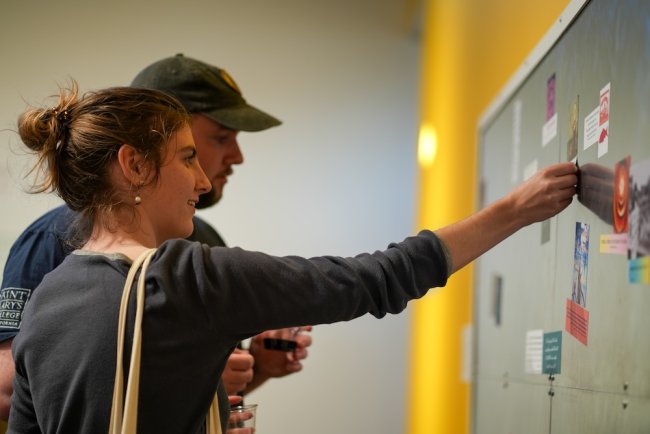
Half Full — Hilda C. Robinson, MA | February 12, 3:30–4:30 p.m.
Join the MoA and the Office of Inclusion and Belonging for a reflective talk with artist Hilda Robinson’s daughter, Dr. Ramona Bishop. A scholar, activist, and educator, Romana Bishop will examine the impact of her mother’'s art and perseverance, connecting it to her life’s work in education and bridging access points. This program is free and open to all. Light refreshments will be served.
Zach Clark Artist Talk | February 28, 2–3 p.m.
Join the MoA for an afternoon conversation with printmaker and artist Zach Clark, as well as students Clark collaborated with for Walking The Quiet. Clark, selected for an acquisition in Spring 2025, worked with students in Fall 2025 to learn, trace, and consider the landscapes and sites of meaning and purpose across the Saint Mary’'s College Campus. Learn more about this process and Clark’s art practice.
Pause for Poetry | February 27, 3–4 p.m. | March 4, 2–3:15 p.m. | June 3, 2–3:15 p.m.
SMCMoA’s curator, britt royer, and MFA poetry student Alana Rodriguez will lead a series of walkthroughs of the SMCMoA Exhibitions, utilizing poetry to interpret art.
Quiet Book Club | March 11, April 15, May 6 from 2–3 p.m.
Co-hosted by the SMC Library and Museum of Art, QBC is a cozy hour set aside just for you to relax with a book, enjoy some refreshments, and take a break from your day. Enjoy soft music, comfy seating, and a selection of books to borrow, or you’re welcome to bring your own (print or digital).
Crafternoons | February 19, March 5, April 16 from 2–3:30 p.m.
Join the SMCMoA & Library for Crafternoons hosted at the SMCMoA! During each session, respond to an SMCMoA exhibition by creating art inspired by the creative processes of each artist.
Yoga in the Galleries | March 14, April 11, May 23, June 6 from 11:45 a.m.–12:45 p.m.
Join the Saint Mary’s College Museum of Art for a Vinyasa style yoga flow class with yoga instructor Ellie Keating. Bring a mat, leave the past week at the door, and get ready to reset by syncing breath to movement while surrounded by art.
Music in the Galleries | February 25, March 25, April 29, May 27 from 1–2 p.m.
Join the Museum of Art for an hour of musical improvisation in the galleries—bring an instrument, your body, your poetry, etc. Be inspired by our fall exhibitions as you listen and collaborate with others. Please email dls12@stmarys-ca.edu with any questions about bringing instruments.
About Saint Mary’s College Museum of Art
Saint Mary’s College Museum of Art (SMCMoA) is a landmark for art in Northern California, with a permanent collection of over 5,000 objects. Inspired by its founder, Brother Cornelius Braeg, the museum cares for the nation’s most comprehensive collection of William Keith paintings. The museum offers educational and programming opportunities, featuring rotating exhibitions twice a year, for the College and the surrounding community. SMCMoA is located across the street from the Soda Activity Center at Saint Mary’s College of California in Moraga, California. Programs and admission are free for all. Public tours begin on Saturday, February 21, and will be offered on select Thursdays at 11 a.m. and Saturdays at 2 p.m. through June 20. The Museum of Art will be closed Monday, March 30 through Tuesday, April 7 for Spring Recess. Please contact Saint Mary’s College Museum of Art at 925-631-4379 or email museum@stmarys-ca.edu for further details. More information can be found at stmarys-ca.edu/museum or by following us on social media @smcmoa.
About Saint Mary’s College of California
At Saint Mary’s College of California, we inspire minds, engage with the world, and create opportunities for students to find their lives transformed. With small class sizes and professors who know you by name, the Saint Mary’s experience empowers students to thrive—whether you’re an undergraduate or a professional looking for the next step in your career. Founded in 1863, the University is proud of our Lasallian heritage and how it fuels teaching and learning in an inclusive and wonderfully diverse community. More than 3,600 Gaels study on our Bay Area campus nestled in the rolling hills of Moraga, just 23 miles east of San Francisco. US News and World Report puts SMC among the top regional universities in the West. You’ll also find Saint Mary’s highlighted in the guide Colleges That Change Lives: 40 Schools That Will Change the Way You Think About Colleges—the first Catholic college and the first university in California to make the list.


