
Turning Data into Direction: How a Saint Mary’s MBA Helped Sanjay Trivedi Humanize the Age of AI
For SEBA MBA alum Sanjay Trivedi, data is magic we can measure. Leadership is the magic we can feel.
Every magic act follows a rhythm. Something ordinary is presented, something unexpected happens, and then everything comes together in a way that makes people see differently. Magicians have names for those moments: The Pledge, The Turn, and The Prestige.
Sanjay Trivedi understands that rhythm. He has lived it twice — once as magician, and now with data. Whether he is performing a close-up illusion or leading analytics and AI at ServiceNow, the mechanics are the same: set the stage, reveal what others can’t yet see, and leave people changed.
The Pledge
Before a sprint review begins, when decisions are still agile and dashboards haven't solidified into scope, Sanjay Trivedi sometimes reaches for a deck of cards. The cards are worn at the edges, shaped by children's parties, corporate events; but most importantly, repetition.
“I didn’t wake up one day saying I wanted to do data analytics,” he says. “Back then, I had no idea what it even was.”
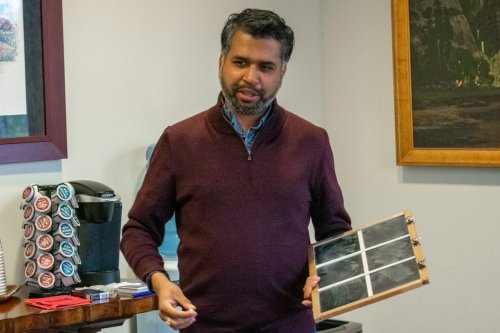
Trivedi is now the Senior Director of Advanced Analytics and AI at ServiceNow, where he leads global teams tasked with turning ambiguity into direction. But his entry into analytics was far from confident. “I fell into data,” he recalls. “And the thing about falling into something is, you learn to land fast.” At Wells Fargo, he was surrounded by analysts fluent in technical language that felt foreign to him. He taught himself SQL and Tableau alone at night, typing queries one line at a time and hoping they would run. “I was learning everything on the fly. I remember texting friends from college saying, ‘I have no idea what I’m doing.’”
Yet something clicked when he realized that a single insight — revealed at the right moment — could shift the trajectory of a meeting. It reminded him of his hobby, magic. In close-up magic, invisible preparation shapes perception. In data, unseen rigor shapes clarity. Both depend on intention.
The Turn
In magic, the Turn is where transformation begins. The card becomes something unexpected. In Trivedi’s career, that transformation occurred when he realized that data itself was never the point. People were.
At Salesforce, he helped build an AI forecasting model that dramatically reduced financial variance, and later founded a Data Product Management Community of Practice that united more than eighty data product managers across the globe. His strength was not technical superiority. It was the rooms he created — rooms where people felt confident enough to question everything.
“Data tells you what’s happening,” he says. “But people tell you why it matters.”
He believes innovation disappears the moment someone becomes afraid to challenge the data. Trust is not a by-product of analytics. Trust is the prerequisite for it. “If people don’t feel safe questioning the data, they won’t innovate.”
Years of practicing magic taught him that attention shapes meaning. A trick doesn’t succeed because something is hidden. It succeeds because someone chooses where to look. Data works the same way. “The dashboard is only as good as the conversation it starts.”
At ServiceNow, he brings that philosophy to AI strategy. His view of artificial intelligence is grounded in responsibility and human judgment. “When we talk about AI, it is not about replacing human judgment,” he says. “It is about sharpening it.”
That belief sits at the center of his book, Transforming Analytics Playbook: Strategies for Business.
In it, he applies the discipline of magic — the hours of unseen rehearsal — to the craft of analytics leadership. “The playbook is not just about better models,” he says. “It is about creating systems that help people make better decisions.” The book reads not like a technical manual but like a field guide for cultures that aspire to clarity.
To Trivedi, magic teaches preparation. Analytics teaches responsibility.
The Prestige
The Prestige is the part of a routine where meaning settles. It is not the trick. It is the realization that the world looks slightly different afterward. For Trivedi, that moment is purpose.
“We are still learning how to teach systems our values,” he says.
His work now focuses entirely on responsible AI. He designs governance frameworks that ensure transparency and protect the people affected by algorithmic outcomes. He measures success not by accuracy alone but by whether he can explain the decision to someone who has never worked in analytics. Accountability — not automation — is the goal.
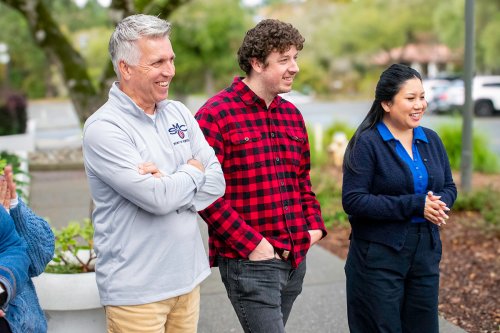
That instinct traces back to Saint Mary’s, where he completed his MBA. “The Saint Mary's MBA did not just sharpen my business thinking,” he says. “It grounded it in purpose.”
In Moraga, he learned that leadership is less about asserting control and more about stewarding trust. His classmates came from different industries and life experiences; the richness of their perspectives forced him to listen as much as he spoke. “The program pushed me to think beyond metrics,” he says. “It was about leading people, not processes.”
When he mentors analysts now, he sometimes brings the deck of cards. It isn’t a prop. It’s a reminder. A signal that clarity doesn’t come from the flashiest model or the smartest person in the room — it comes from attention and intention. Magic taught him that. Saint Mary’s honed it.
“Anyone can learn a tool,” he says. “What matters is how you use it to tell a story people can trust.”
He spreads the cards across the table, the motion clean and unhurried. In data work, he believes the same principle applies: slow down, notice what matters, take responsibility for what follows. Saint Mary’s reinforced that leadership is not about control or credibility. It’s about accountability. It’s about using your influence for good.
“The real magic isn’t in the algorithms,” he says. “It’s in the people.”
He gathers the cards again — one practiced sweep, years of repetition distilled into a gesture so smooth it disappears. In magic, the audience never sees the hardest part. In leadership, they shouldn’t have to.
He looks up.
“It’s what you choose to do with what you know.”
That, to him, is the Prestige.