Writing for Non Profits (WRIT 400) Spotlight

Where Professional Writing and Community Service Intertwine: Writing for Nonprofit Organizations
by Sevanah Sandoval ‘28
Writing for Nonprofit Organizations (WRIT 400) is one of many engaged learning courses offered at Saint Mary’s. Through partnerships with local nonprofits, students can develop their professional writing skills while contributing to their community and fulfilling their engaged learning (EL) core requirement.
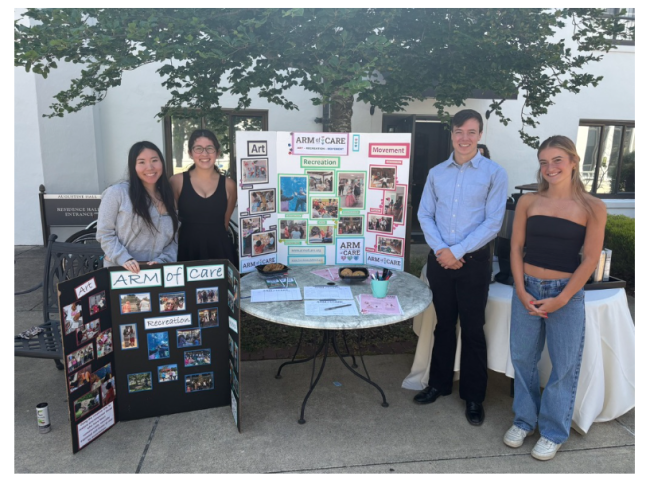
The Writing Studies Program at Saint Mary’s College of California offers upper-division professional writing classes each academic year, cycling through courses such as Writing in Healthcare Professions, UX and UI Writing, and individual internships with writing professors. One such writing course is WRIT 400, Writing for Nonprofit Organizations. Though led by a professor, the class is unique because the work itself is largely driven by the students and their partner nonprofit.
Professor Leslie Anglesey, the professor for WRIT 400, said the course “is both intentionally and by necessity a very flexible class…you really don’t get to teach the same thing every semester because your biggest variables are your students.” When teaching the course last term, students partnered with one of three local nonprofits: Race for Research, Monument Crisis Center, and ARM of Care. During these partnerships, Professor Anglesey saw groups working on projects ranging from designing new marketing materials to finding grants to apply for.
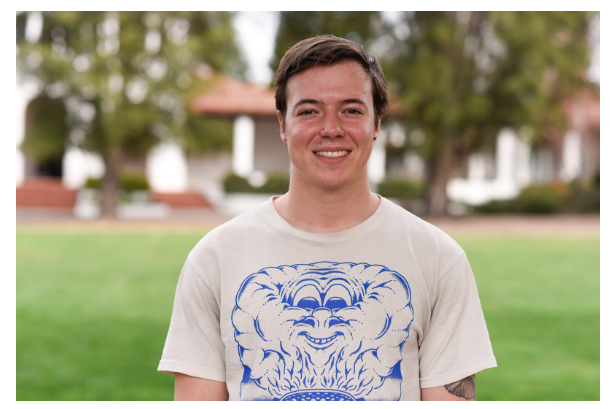
Sam Nobile ‘25 partnered with ARM of Care when he took WRIT 400 last spring. His favorite project was a memorandum informing the writing style of future marketing materials for his partner nonprofit. Nobile enjoyed the chance to learn how to write in a way that was “concise, yet thorough.” Further, he found value in being able to practice functional writing rather than the creative writing he was more familiar with.
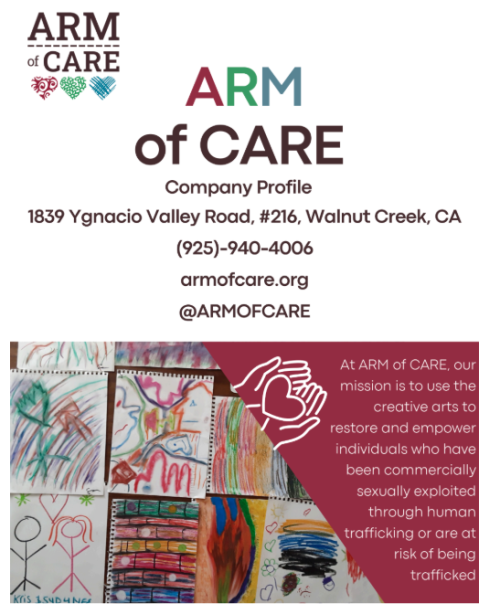
Callista Yu ‘25, a teammate of Nobile, named her favorite project from the course as the company profile the team created to give an overview of what ARM of Care does. She appreciated the chance to learn about crafting messaging with a specific audience in mind while maintaining the voice of the organization. As a Communications major, Yu was able to draw on the skills she had developed in her major while also expanding them with real-world experience.
Because WRIT 400 guides students to create work that exists beyond the exchange between student and professor, it develops writing skills in a way other courses cannot–students write with the added consideration of producing a quality deliverable for their nonprofit partner, while still being anchored in the safe learning environment of the classroom. This chance to navigate real-world professional writing with the support of a professor is critical to students’ growth as professional writers.

Professor Anglesey cited learning how to “pivot directions” as among the most vital skills the course teaches. Whether a team member is unable to complete their part of a project or work with the nonprofit partner is different than what the students expected, being able to quickly adapt to changing circumstances when a challenge arises is vital for every profession. Further, the course lets students strengthen their time and project management skills alongside their ability to work in a team. Professor Anglesey also identified writing with a real audience in mind as another critical skill developed in this course. Knowing their work is going to their nonprofit partner, students are pushed to consider the rhetorical situation they are writing within, and how to approach it for each assignment. Thus, writers get to see firsthand “that writing serves a purpose beyond demonstrating knowledge.”
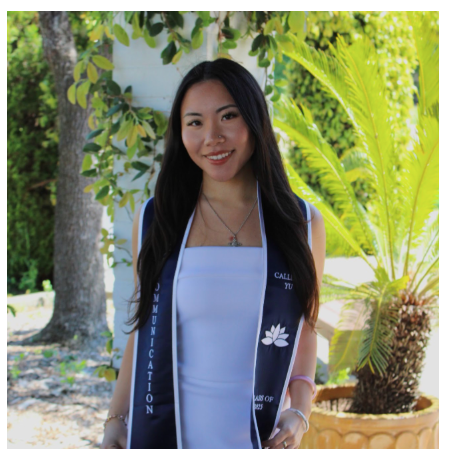
Nobile and Yu both shared how WRIT 400 challenged them to grow as writers. As an English major, Nobile is no stranger to writing. Yet, he said that the course diversified his skillset and made him a more confident writer, both of which he said were valuable to his pursuit of a writing career after graduation. He specifically noted how the course helped him “strengthen [his] ability to write for a specific purpose that isn’t necessarily creative (but certainly can be),” all while providing real-world experience. Yu noted that the course pushed her to write “with purpose and strategy…[and] to create writing pieces that were impactful and directly supported real-world missions.” Building these skills became immediately applicable for her upon graduation, as she shared:
This past summer after graduation, I interned at a national non-profit (Transforming Age) whose mission is focused on supporting and enhancing the lives of older adults. I was surprised as to how much of what I’ve learned in WRIT 400 was directly applicable to the work that I was doing. As a Communications and Marketing intern, I spent a great deal of time creating marketing material for the company, such as brochures, digital flyers & posters, and much more. I also supported marketing campaigns and created videos and reels to appeal to different audiences. Lastly, I wrote and posted blog posts onto their website to keep readers up to date on internal company changes and team member spotlights. These are just a few examples of the responsibilities that I had within my role, but WRIT 400 helped equip me with all the necessary tools to prepare for my work.
No matter your major, professional writing and the other skills taught in WRIT 400 are of incredible value for a wide variety of careers. If you want to fulfill your engaged learning requirement, give back to the community by assisting local nonprofits, or develop your skills as a professional writer, consider taking WRIT 400 when it is offered next.
Sevanah Sandoval ‘28 is a professional writing intern with the Writing Studies Program at Saint Mary’s College of California.