Combine your passion for dance with a comprehensive understanding of the moving body. 

In our interdisciplinary program, you’ll engage with dance on multiple levels—creatively, intellectually, and physically. Guided by our outstanding faculty and a diverse range of guest artists, you’ll receive conservatory-caliber training in the dance studio alongside laboratory-based courses in biology, chemistry, kinesiology, and somatics. Theory courses in dance will also offer the opportunity to attend shows throughout the Bay Area. Your studies will culminate with a self-generated senior project that demonstrates mastery in your chosen field.

Learn More About the Program

Get to know our well-respected faculty and their specialties, as artists and scholars. Or explore scholarship opportunities and an array of performance possibilities.


Curriculum

Dance Science, BS

BS

Dance Science is an interdisciplinary major that investigates dance practice with a focus on an application of the scientific principles that contribute to an understanding of the moving body. The BS in Dance Science is designed to enable students to work in a range of health and fitness industries in addition to graduate studies with the proper prerequisites. The BS is 68 units with courses in biology, chemistry, kinesiology, choreography, movement and theory. Students will be able to combine their passion for dance with their esteem for sciences.

Learning Outcomes

  • DISTINGUISH technical terms and theories used in dance studies, influenced by aesthetics, anatomy and science, Somatics, pedagogical and performance theories; and employ this terminology appropriately when discussing and writing about specific works and/or assessing one's practice.
  • RECOGNIZE the cultural context of a work of art or style of movement in the studio and in writing. Frame creative challenges within larger historical/theoretical questions to locate one¬ís own place in history by recognizing the dance lineage that shape us in our search for defining the dancing identity necessary in today¬ís world;
  • "ENGAGE in critical discourse to explore how social identities are constructed, constrained, reinforced, and treated with inequality by systems of power, including within the field of performing arts by analyzing issues of access, representation, exclusion, and inclusion in the field in both creative practice and on paper; "
  • FORMULATE an intersectional perspective through the lenses of race, ethnicity, gender, class, sexuality, ability, age, and culture; strengthening our sense of how socially conscious bodies are able to see and take action towards social diversity in relationship to the SMC community, the Bay Area, the country and beyond when assessing one¬ís practice.
  • DEMONSTRATE individual artistic choices and promote self-authority and agency to express individual thought and creativity outside of rigid, dominant and binary world views both experientially and in writing;
  • DEMONSTRATE the biological workings of the human body and its relevance to human health through discussion, writing, and lab work;
  • ANALYZE health, fitness and performance parameters in diverse populations with attention to issues of access, representation, exclusion, and inclusion in the field;
  • APPLY the practice of scientific inquiry through laboratory experimentation including the logic of experimentation, data analysis and ethical implications.

Requirements

Lower Division

  • The following lower-division courses are required for the major.
  • General Chemistry I (4 units)
  • General Chemistry I Laboratory (1 units)
  • Choreography I (2 units)
  • Dance Production I (1 units)
  • Intro Probability & Statistics (3 units)

Chemistry

  • Take one of the following Chemistry courses with the corresponding lab. Students aiming to satisfy prerequisites for physical therapy graduate programs should take CHEM 230 and 230L.
  • Organic Chemistry I (4 units)
  • AND
  • Organic Chemistry I Laboratory (1 units)
  • OR
  • General Chemistry II (4 units)
  • AND
  • General Chemistry II Laboratory (1 units)

Biology

  • Take one of the following Biology courses with the corresponding lab.
  • Introduction to Biology for Kinesiology (5 units)
  • AND
  • Introduction to Biology Laboratory
  • OR
  • Intro Cell Bio, Molecular Bio, & Biochem (5 units)
  • AND
  • Intro to Cell Bio, Molecular Bio Lab

Anatomy and Physiology

  • Take two semesters of human anatomy and physiology, including lab. Students can take the integrated A&P sequence or stand-alone courses. Students aiming to satisfy prerequisites for physical therapy graduate programs should take BIOL 215 and 225.
  • Take one of the following groups:
  • Anatomy and Physiology I (4 units)
  • Anatomy & Physiology I
  • Anatomy & Physiology II (4 units)
  • Anatomy & Physiology II
  • OR
  • Human Anatomy (5 units)
  • Human Anatomy Laboratory
  • Human Physiology (5 units)
  • Human Physiology Laboratory

Lower-division Movement Classes

  • Take a total of six movement classes from the following list. Courses may be repeated.
  • Tap (1 units)
  • West African Dance (1 units)
  • Baile Folklorico/Mexican Folk Dance (1 units)
  • Jazz Dance (1 units)
  • Modern/Contemporary Dance I (1 units)
  • Ballet: Somatic Fundamentals (1 units)
  • Gaga/Improvisation (1 units)
  • Hip-Hop Dance (1 units)
  • Chinese Dance (1 units)
  • Ballroom (1 units)
  • Intermediate Tap (2 units)
  • Intermediate West African Dance (2 units)
  • Intermediate Baile Folklorico/Mexican Folk Dance (1 units)
  • Intermediate Jazz Dance (1 units)
  • Modern/Contemporary Dance II (1 units)
  • Ballet II (1 units)
  • Intermediate Hip-Hop Dance (1 units)
  • Intermediate Chinese Dance (1 units)
  • Intermediate Ballroom (1 units)

Upper Division

  • The following courses are required. Dance Science students must obtain permission of the instructor to enroll in KINES 360 and 460.
  • Laban and Bartenieff Movement Studies: perspectives in Social Somatics (3 units)
  • Dance and Performance Studies (4 units)
  • Saint Mary's College Dance Company Ensemble (1-2 units)
  • Senior Project (4 units)
  • Structural Biomechanics (3 units)
  • Exercise Physiology (5 units)
  • Exercise Physiology Lab

Upper-division Movement Classes

  • Take six movement classes from the following list. Courses may be repeated.
  • Advanced Tap (1 units)
  • Advanced West African Dance Ensemble (1-2 units)
  • Advanced Baile Folklorico/Mexican Folk Dance (1 units)
  • Advanced Jazz Dance (1 units)
  • Modern/Contemporary Dance III (2 units)
  • Ballet III (2 units)
  • Advanced Gaga/Improvisation (1 units)
  • Advanced Hip-Hop Dance (1 units)
  • Advanced Chinese Dance (1 units)
  • Advanced Ballroom (1 units)
  • Modern/Contemporary Dance IV (1 units)
  • Ballet IV (1 units)

Upper-division Elective

  • Take one of the following courses. Dance Science students must receive permission of instructor to enroll in upper-division Kinesiology classes. The upper-division Biology courses require prerequisites that are not part of the Dance Science major.
  • Genetics (5 units)
  • Microbiology (5 units)
  • Dance Pedagogy (3 units)
  • Asian Dance in the Contemporary World (3 units)
  • Dance History: Anti-Racist/Decolonial Approach (3 units)
  • Nutrition for Sport and Physical Activity (4 units)
  • Care and Prevention of Athletic Injuries (4 units)
  • Motor Learning and Control (4 units)
  • Perceiving the Performing Arts (3 units)
  • Global Music and Dance (3 units)

What can you do with a degree in Dance Science?

A degree in Dance Science provides students with integrated training in dance, anatomy, biomechanics, and physiology for careers in movement health and performance.
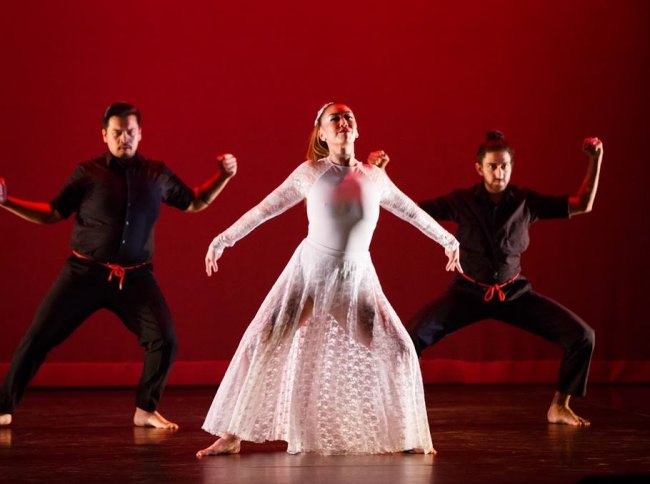
Image
Dancers

Physical Therapist (prep) / PT Aide
Support rehabilitation programs; prepare for DPT with the required prerequisites and clinical hours.

Athletic Trainer / Strength & Conditioning Coach
Prevent injuries, program conditioning; pursue ATC/CSCS certifications.

Clinical Exercise Physiologist
Conduct exercise testing/prescription; monitor cardiometabolic health (ACSM pathways).

Dance Medicine Specialist
Screen dancers, design cross-training, manage return-to-performance protocols.

Biomechanics / Human Performance Lab Tech
Run motion capture, force-plate, EMG; analyze gait and jump/landing mechanics.

Pilates / Yoga / Somatics Instructor
Deliver evidence-based conditioning and movement re-education.

Choreographer / Performer / Teaching Artist
Create, perform, and teach technique, conditioning, and injury-aware practice.

Kinesiology / Rehab Research Assistant
Collect and analyze data; contribute to IRB protocols, manuscripts, and grants.

Occupational Therapy (prep)
Apply movement science to functional rehab; complete OT prereqs and shadowing.

Testimonials

“The SMC Dance program has always provided a positive learning environment for its students and me. They offer a lot of diverse dance classes such as Modern, Ballet, West African, Ballet Folklorico and many more. The dance professors are always very warm, positive, caring and fun to be around within the studios. They are always there for their students and help push them to achieve their goals.”  

Eesha Shah, Class of 2022

The Best 386 Colleges

The Princeton Review, 2023