
Deep-dive learning: After the 1984 discovery of the Uluburun shipwreck, underwater archaeologists hauled up over 20,000 artifacts. Decades later, Christopher Baker '26 joined a team cataloging those recovered objects. / Photo courtesy the Institute of Nautical Archaeology
Christopher Baker ’26 Spent the Summer Studying a 3,300-Year-Old Shipwreck in Turkey. Then He Headed for Rome
Through SMC’s Liberal Arts Bridge Program, Baker worked with the Institute of Nautical Archaeology, studying artifacts from a Late Bronze shipwreck. Now, he’s on his own archaeological tour of Europe while studying abroad in Italy.
On a Friday afternoon in autumn, Christopher Baker ’26 finds himself on a spontaneous solo train ride through central Italy. He chooses a random stop heading northwest and ends up in Bracciano, a small lakeside village. Here, he strolls through town, observing some of the best-maintained medieval architecture in all of Italy—notably the halls of the Ordesini-Odescalchi castle. As the sun sets, Baker walks along the shore of the famous volcanic Lake Bracciano before hopping back on the train.
This is what a study break often looks like for Baker, an Archaeology major at Saint Mary’s who is studying abroad at John Cabot University in Rome this semester. He often takes similar day trips around Italy, but has also ventured to France, Monaco, Switzerland, Germany, Croatia, England, and beyond. This semester comes on the heels of another immersive (and submersive) experience: a summer internship at the Institute of Nautical Archaeology in Turkey, an opportunity made possible by Saint Mary's Liberal Arts Bridge Program.
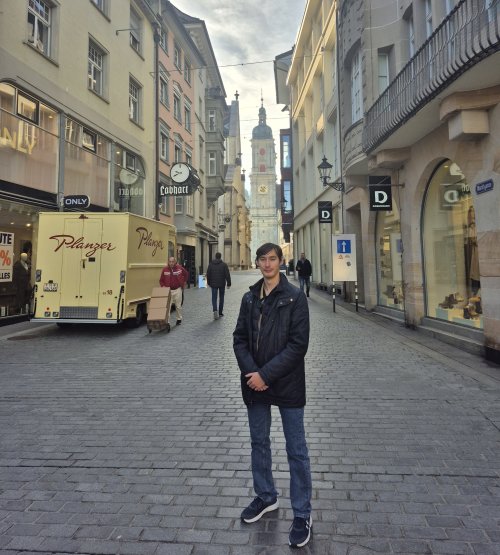
Of course, Baker is currently in school, too. But his classes often take field trips to museums and historical sites—not too different from his days off. For instance, in Baker’s Ancient Roman Wall Painting course, the professors often take the class to see walls out in the wild.
For Baker, studying abroad in Italy has been impactful on an academic and personal level. “Being able to see the works in person can change your perspective on how you interpret them,” he tells me. “There are just so many different atmospheres you can see in architecture, language, or how people eat. It's been fascinating to observe.”
Past becomes present
That Baker is studying in Italy is a case of history doubling back on itself, as it so often does. In eighth grade, he took his first trip to Rome as part of a marching band tour through Europe. While there, he visited a cousin who was attending John Cabot University and working on archaeological conservation projects throughout Italy, as well as in Egypt, Albania, and Greece.
“That’s really what got my foot in the door, because what she was doing was interesting to me, and it was something I was coming to appreciate,” Baker says of his cousin. He held onto that fascination throughout high school. “Then I decided to pursue archaeology at Saint Mary's.”
Once at SMC, Baker began searching for opportunities to get hands-on field experience. He soon found one. In 2024, as part of a Saint Mary’s project, he and two other students, Aruna Silva ’27 and Emma Eagan ’28, began working with materials found a few miles from campus, at the nearby Joaquin Moraga Adobe.
Built in 1841 by Don Joaquin Moraga—grandson of the early Spanish explorer José Moraga—the adobe is the oldest building in Contra Costa County. In 2010, the Adobe was purchased by a community group that hopes to restore the building as a museum and open it to the public by 2026.
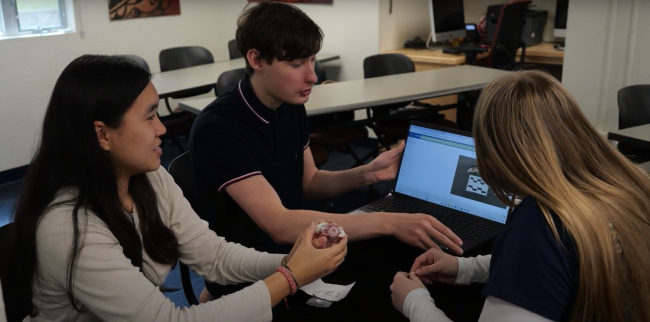
Amidst the restoration, Baker, Silva, and Eagan had the chance to inventory dozens of artifacts found at the site. Guided by Anthropology and Archaeology Professor Cynthia Van Gilder, they examined and documented ceramic shards, silverware, tools, and horseshoes. In May 2025, the students presented their findings at the College’s annual Student Research and Creative Works Conference.
“Our work completing this inventory will support future conservation efforts, as well as research into the use of these objects,” Baker said in their project video.
Barnacles and bronze
Earlier in spring 2025, Baker was chatting about research opportunities with visiting Anthropology professor Laura White, who specializes in ancient ships and shipwrecks. Had Baker heard about the Institute of Nautical Archaeology and the Uluburun shipwreck? she asked. He had not.
White had worked at the Institute herself while she pursued her doctorate. She reached out to a colleague in Nautical Archaeology at her alma mater, Texas A&M, who was able to secure Baker with an internship, albeit unpaid. But thanks to SMC’s Liberal Arts Program, which provides funding for Liberal Arts students with unpaid or underpaid internships, Baker was able to take the opportunity.
By June, Baker was on a flight to Turkey, headed to study artifacts far more ancient—and barnacled—than Joaquin Moraga’s horseshoes.
As far as archaeologists can surmise, the ship was en route to the Aegean Sea when tragedy struck. Its cargo sank off the Uluburun peninsula along the coast of Turkey around 1320 B.C.E., where it remained, unnoticed, for 3,300 years. But in 1982, a local sponge diver stumbled across what he called “metal biscuits with ears” on the sea floor. Those biscuits, it turned out, were oxhide ingots, and the diver had uncovered one of those most spectacular shipwrecks in human history.
Upon discovery, the Bodrum Museum of Underwater Archaeology and the Institute of Nautical Archaeology sent archaeologists to conduct 11 diving campaigns between 1984 and 1994. By the end, a total of 22,413 dives were completed—with more than 20,000 artifacts hauled up from the merchant ship.
Four decades later, those artifacts are still being conserved, restored, and cataloged. Baker was asked to focus his time and effort on the bronze artifacts collected from the Uluburun shipwreck—“those being spearheads, bronze swords, cauldron pieces, arrowheads, nails, axes/adzes, fishing equipment, chisels and so on,” he says. Before he even traveled to Turkey, he spent months combing through digital files of the artifacts.
"SMC's Liberal Arts Bridge Program allowed me to actually go to Turkey...Whether it's understanding what the full process of archeological work entails or just post-excavation, it's important to get hands-on experience in the field.”
“I've been going through and refining them, seeing which ones we need to keep and remove,” Baker tells me in June. “Many of these files haven’t been organized in the past 40 years or so.”
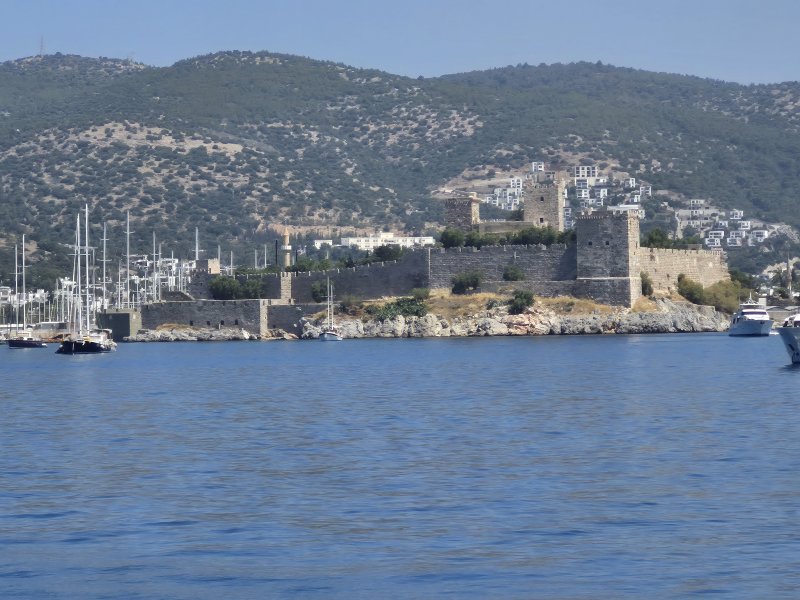
Once he arrived on site in Bodrum, Turkey, Baker was at last able to work with the artifacts hands-on. Every morning, he and the team met up in the Institute library to review the day's plan. Then, they made their way down to the Bodrum Castle, an oceanfront fortification that has served myriad roles—a chapel, a prison, a military base—since its construction in the early 1400s. Now, it is home to the Bodrum Museum of Underwater Archaeology.
Within these ancient walls, museum staff removed Uluburun artifacts from storage while Baker and the team worked to identify and document them. As with the items from Moraga’s adobe, it was not uncommon to find one broken into pieces. One day, Baker and his team examined a shattered bronze sword that was especially perplexing.
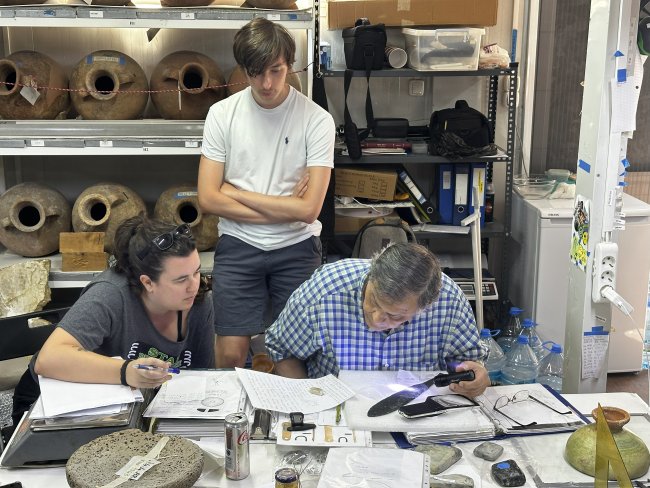
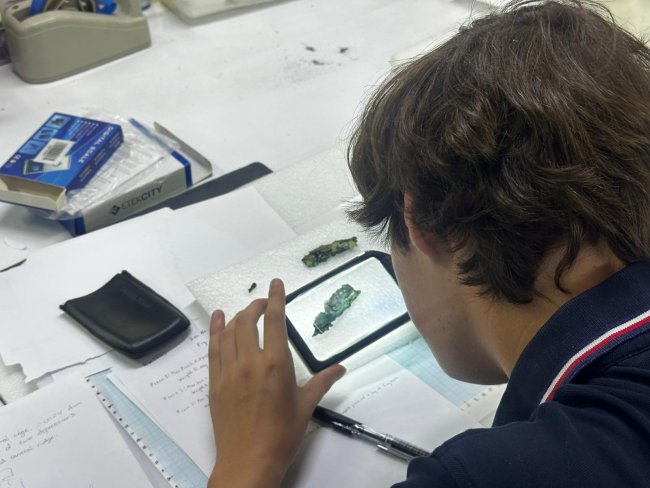
“My supervisors spent about half an hour debating how the fragments all fit together,” Baker recalls. Eventually, they were able to identify a piece sticking out from the handle as a cross guard—a dead giveaway for Late Bronze Age mechanics. “From there, they called the head of the museum and got approval down the chain of command to match the piece to the Bronze Age.”
Baker’s work helped bring the Institute closer to publishing a multi-volume showcase of the findings from the Uluburun wreck, a project years in the making. “Uluburun is one of the only Bronze Age shipwrecks to survive from this period, and it's so well preserved and with such a wealth of materials on it,” Baker says.
There were times throughout the summer, he acknowledges, when he felt out of his depth. "However, the team I was working with truly made me feel a part of a larger project that was operating on multiple different levels, both academically and professionally.”
Unearthing a Future
“Getting to work and live in Turkey for a few months was a special process,” Baker said. “SMC’s Liberal Arts Bridge Program allowed me to actually go to Turkey, as the internship did cover room and board.”
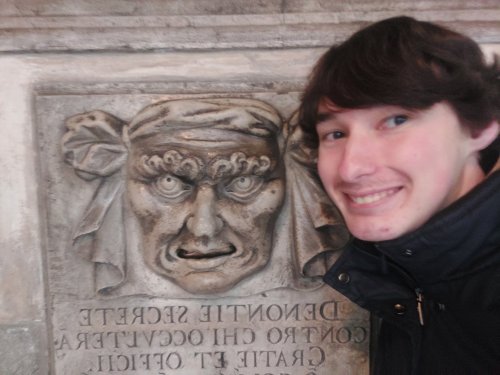
As he prepares to graduate in the spring, Baker credits his time in Turkey for preparing him for what lies ahead. “Whether it's understanding what the full process of archeological work entails or just post-excavation, it's important to get hands-on experience in the field.”
For now, though, studying in Rome, where his fascination for archaeology sprouted six years ago, Baker has come full circle. This “wonderful bit of coincidence,” he says, points to the benefits of pursuing one's interests. He encourages other Gaels to do the same.
“Always be curious, especially when it comes to your fields,” Baker says. “Even if it’s something you’ve never been interested in before, follow through, see what happens. You never know when something might catch your eye.”
Baker’s speaking metaphorically, of course. But it’s also true that archaeologists, by trade, are in search of the eye-catching—a glittering ingot on the seafloor, or a shard of Spanish pottery in the Moraga dirt. So they stay attentive, believing history is there, waiting for them, as reliable as the next stop on the train.
Katie Hayek ’28 is a Student Writer with the Office of Marketing and Communication at Saint Mary’s. Write her.


