
Friendships and community: two big reasons students value living on-campus / Photo by Francis Tatem
Deepening a Commitment to Community: Saint Mary’s Expands On-Campus Residence Requirement for Incoming Students Starting Fall 2026
Beginning with the Class of 2030, the College will require incoming students to live on campus for both their first and second years. What are the benefits? Students earn better grades, finish college sooner, and feel a greater sense of belonging.
For first-year students beginning studies at Saint Mary’s in fall 2026, the College is introducing a new on-campus residency requirement: In addition to living on campus during their first year of study, students will also be required to live on campus their sophomore year. For students, there are years of evidence pointing to clear benefits: They earn better grades, finish college on time, and feel a deeper sense of belonging.
The vast majority of second-year students already choose to live on campus. So Saint Mary’s is leaning in on some of the aspects that make on-campus residence a richer and more rewarding part of their student experience.
James Sciuto, EdD serves as Vice President of Student Life. For starters, he points to the academic benefits for students—and better academic success ensures they stay on track to finish their degree on time. More broadly, students attest to the fact that living on campus helps them build more meaningful and lasting relationships with their peers, and being on campus provides greater opportunities to meet with faculty and take advantage of tutoring and mentoring resources. Plus, it’s that much easier to be involved with student organizations and Club Sports, and to attend cultural and athletic events.
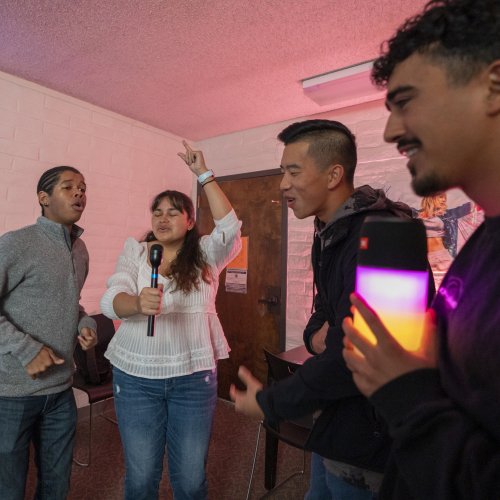
“Living in community and the resources that are available to students day and night on campus, it makes it a lot easier for them to connect with each other, to connect with faculty, to connect with staff who are supporting them in being successful,” Sciuto says. “All of those are right here: access to study spaces and the library—so you can really focus on studying. And then build time for recreation, for student leadership, and more.”
Expanded meal options on campus—including Oliver Hall, Cafe Louis, and the 1928 Pub—also make living on campus more attractive. Bay Area outings led by Campus Recreation ensure students have opportunities to explore what makes the region so special—from white water rafting to the Santa Cruz Boardwalk, horseback riding on the coast to skiing in Tahoe. Conversely, there are the time management aspects that students who move off campus might not consider but should—including daily commuting, and uncertainties that include road construction and rush hour traffic.
Gael Chats with Gali

Galilea Candido ’26 is a Resident Advisor in Claeys South, a residence hall that’s home for mostly second-year and third-year students, but also includes some seniors and graduate students. She goes by Gali to those who know her, and on a Monday morning, she’s in Cafe Louis having an iced coffee and leading an online Gael Chat with the residents in her hall. It’s a dedicated time to check in and answer questions, social and academic alike—from roommates to midterms. It’s also a way to connect with students online, as she does day-to-day in person, and part of the intentional nurturing or community.
“When you create a welcoming environment, a lot of residents feel comfortable just coming to your door and stopping by and talking,” Candido says. “It makes them feel at home, and welcome. They might just check in and ask, ‘How are you doing? How was your weekend?’ And it’s important to build that connection, so they feel comfortable enough to have a serious conversation when there’s something they’re concerned about.”
At Claeys South, Candido hosts regular social events for residents. Pizza nights and movie nights are big—especially, last year, with a series of retro horror films and Disney scary movies in the runup to Halloween. Maybe an even bigger hit is when she bakes cinnamon rolls.
"Living in community and the resources that are available to students day and night on campus, it makes it a lot easier for them to connect with each other, to connect with faculty, to connect with staff who are supporting them in being successful."
—James Sciuto, EdD, Vice President of Student Life
Home is how Candido thinks of the hall—and how the students in her hall talk about it, too, she says. She’s from Vallejo, originally, in the north of the San Francisco Bay Area. At Saint Mary’s she is majoring in Kinesiology with a minor in Theology and Religious Studies. The minor wasn’t something she had planned on until she began studying at SMC. “I took a course in Sociology of Religion my first year and I loved it,” she says.
As for becoming an RA, the path for Candido began when she arrived on campus as a first-year student for her own Weekend of Welcome. She loved the atmosphere, and so the following year she became an orientation leader and WoWie herself. Then she found herself asking, How can I carry that sense of supporting the community throughout the year?
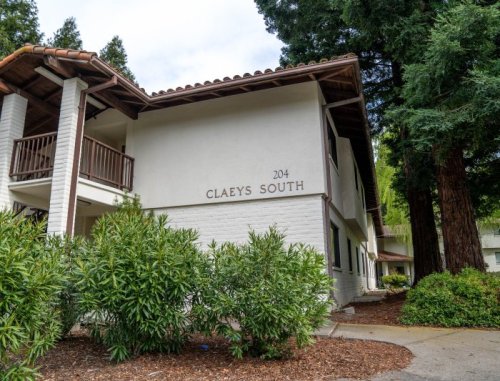
The residence hall isn’t the only place she does that. She works as a Club Sport Student Coordinator, helping manage activites for the hundreds of students who participate in Club Sports. She also works as a student ambassador in the Financial Aid office, where she fields questions from students and families and, if she doesn’t have the answer—such as where to find your financial aid packet when you log in—she connects them with one of the full-time staff who will.
That opportunity to participate in different activities on campus comes naturally with living on campus, she notes; it’s much easier to connect with students who share interests. “It could be Club Soccer. It could be debate. Before coming to college, I was super shy,” she says. Though meeting Candido now, you’d never guess that. “Here you’ll find your community,” she says. You’ll also find support right at hand; it was living on campus that she learned how accessible Counseling and Psychological Services (CAPS) was for a whole range of support. “We have Timely Care, the Intercultural Center, the Honors Program with its own lounge in Aquinas,” she says.
Among the less obvious dimensions of living on campus with an RA like Candido is what it feels like day-to-day. “You're not just my resident,” she says. “We care for you. You're your person, and we respect you.”


