
Venice, Padua, Trieste, & Duino
JAN 402 (3-CU)
Decadence in Venice
Travel dates: Saturday, Jan. 2 - Thursday, Jan. 28, 2027
Instructors: Charles Hilken, chilken@stmarys-ca.edu; Gabe Pihas, gdp2@stmarys-ca.edu
Course fee: $5,050
Prerequisites: Attend at least 1 information session & receive instructor permission
We will try to understand decadence, and Venice as a symbol for decadence, from several angles. We will try to understand Venice through works of visual art and literature that made it a symbol of decadence, as well as consider the physical decay of Venice and its place in today’s environmental crisis. Finally, we will look at how Venice is attempting to become a better city by limiting modern tourist decadence. January is the perfect time to visit the city because it is low season for tourism, allowing us to experience the beauty of the city.
In his novella Death in Venice, Thomas Mann suggested the oppressive problem of decadence for modern culture. What Mann called decadence at the beginning of the 20th century has perhaps become normal life for us today, such that we are no longer aware of modern decadence as a falling away from anything. Should we recover this awareness? If so, are we capable of it? What is “decadence”, and is there a way to find meaning amid a decadent culture? Or, since so much great art and literature that has been branded “decadent”, is “decadence” in fact really something we should embrace, not avoid?
Venice is the perfect place to explore these issues. It was long a center for decadence, and came to be defined by it. After Venice’s empire began to slip away in the 1400’s, the city has been forever sinking, and its elegant buildings rotting. Its decadence has long been part of its appeal. Since the days of the grand tour (16th-19th century), a lady or a gentleman from Northern Europe on their way to get an education in Rome would make sure to stop in Venice, as much for its loose living as for its scenery. Its foggy canals, courtesans, and gothic shadows made it the passionate, romantic alternative to classical harmony and clarity. Its unclassical art was typified by a hazy picturesque or by excessive, voluptuous color. As the enlightenment gained ground, Venice was a center both for liberalism and an escape. A meeting point for rationalism, liberty, and commerce, and decadent pleasure, it also became the city of sentimentalism and idleness, and the city of decadent melancholy.
In the early 20th century, amid the decay of Venice’s power, its elegant cafes became the place for modernists to reflect on the incoherence they detected in European humanism. Venice continues to be a world capital of contemporary art. At the same time, Venice has always also been in physical decline. The salty moisture in the air, and the annual flooding known as acqua alta eats away at the buildings as the city slowly falls ever deeper into the sea. Its submerged piazzas called attention to rising sea levels across the globe. Despite desperate attempts to save it, Venice lives on borrowed time. The coronavirus essentially shut down Venice’s tourist business and brought to the fore new questions about the city. Why did Venetians (or anyone) want hordes of tourists rushing through their city? Might the city not be a better place if they could get rid of the crowds of people taking selfies in front of gondolas in the summer? Could they survive without it? We will study our theme through a combination of (1) seminars on three classic texts, plus one opera, and a recent book in urban studies. The readings are short, so as to allow us time to see Venice; (2) excursions with preparatory lectures that explore the art, architecture, history and culture of Venice; (3) an exploration of the lagoon of Venice and its natural environs by boat.
As well as Venice we will explore Padua, an intellectual center attached to Venice, home of an ancient university with a vibrant present. We will also visit Trieste, which like Venice has a multicultural history, and was also an important center for “decadent” artists and authors, like Joyce, Rilke, and Svevo. We will hike the beautiful sea cliffs of the Carso close to the town of Duino.
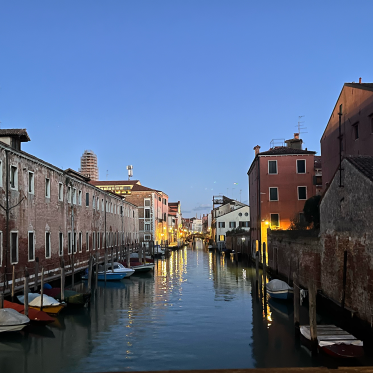
Students will be living in dorm accommodations right in the heart of Venice, which is beautiful in January. The off-season is usually the only way to really see the city. There are many, many fewer tourists, it is really the very best time to visit. The dorm is a modern building built within the walls of a ruined medieval church with a particularly important place in Venetian history. It is very unusual in Venice in that it has two large courtyards and a basketball court/soccer field.
The student fee includes, among other things, airfare, watertaxis to/from the airport in Venice, housing, all tickets for transport around Venice and all museums, churches, etc., groceries for three meals per day made in a communal kitchen, as well as a couple of receptions.
- Saturday, Jan. 2: Depart from SFO
Week 1
- Sunday, Jan. 3: Arrive in Venice
Activities: Water taxis from Airport to dorms, Orientation - Monday, Jan. 4: Venice
Activities: More orientation, Piazza San Marco (symbolic and political center of Venice); San Zaccaria (gem of Renaissance Venetian architecture with major paintings). - Tuesday, Jan. 5: Venice
Discussion: Shakespeare’s Merchant of Venice I-III.
Lecture: “Introduction to Decadence and Venice.”
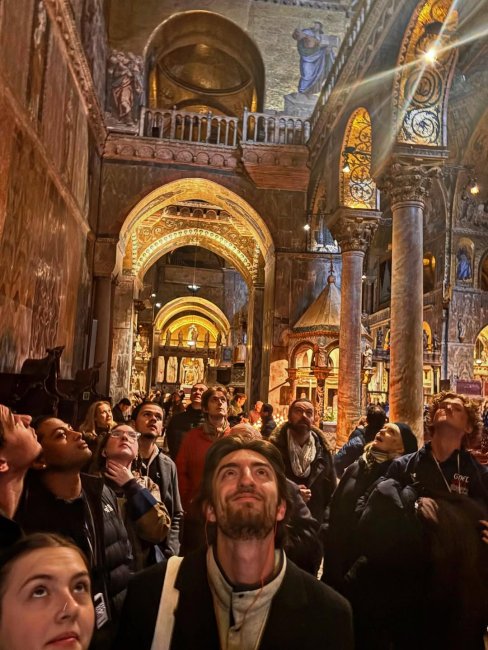
Activities: Basilica San Marco (Byzantine Church of the Doge. Mosaics, Pala D’Oro, Treasury, museum and overlook of Piazza). - Wednesday, Jan. 6: Venice
Discussion: Shakespeare’s Merchant of Venice IV-V.
Lecture: “Ghetto and Funduq-Venetian Jewish and Muslim History.”
Neighborhood Excursion: Madonna del Orto (Tintoretto, other painters); I Gesuiti (paintings of Titian and others). - Thursday, Jan. 7: Venice
Lecture: “The Longest Lasting Government: Republic of Venice (697-1797).”
Excursion: Palazzo Ducale (the palace of the Doge, filled with major painting and impressive rooms). - Friday, Jan. 8: Venice
Lecture: “Venetian Colorito and the Rise of Modern Oil Painting (Bellini-Giorgione).”
Excursion: Accademia (main museum of Venetian painting, major paintings of Bellini, Giorgione, Titian, Veronese, Tintoretto, Tiepolo). - Saturday, Jan. 9: Trip to Padua
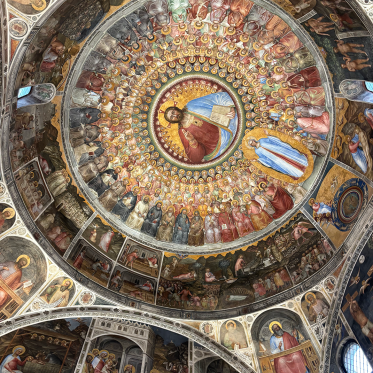
Activities: Giotto Cappella degli Scrovegni, Baptistry, Markets at Palazzo della Ragione, Piazza dell'Orologio, Sant’ Antonio, Santa Giustina, Palazzo del Bo, Prato delle Valle.
Week 2
- Sunday, Jan. 10: Venice
Free day, Optional Mass at Basilica San Marco. - Monday, Jan. 11: Venice
Discussion: Don Giovanni.
Lecture: “Don Giovanni and Veronica Franco (Carnival, Opera, Libertinism, Proto-Feminism, and Liberalism)”.
Excursion: La Fenice (Historic opera house). - Tuesday, Jan. 12: Venice
Discussion: Italo Svevo, Confessions of Zeno (“Preface”, “Introduction”, “The Last Cigarette”, ”The Death of My Father”, “The Story of My Marriage”).
Lecture: “Decadence and Decorum, the Tiepolo Tipping point.”
Excursion: Ca’ Rezzonico (18th century palazzo with important paintings by the Tiepolos and others, rococo decor and furniture.) - Wednesday, Jan. 13: Venice
Discussion: Italo Svevo, Confessions of Zeno (“Wife and Mistress”). - Thursday, Jan. 14: Venice
Discussion: Italo Svevo, Confessions of Zeno (“A Business Partnership”, “Psychoanalysis”).
Excursion: Ca’ Fortuny (Fashion, art, photography, and set design by an early 20th century Spanish designer in his medieval palazzo/studio). - Friday, Jan. 15: Venice
Free day, Optional Excursion: Arsenal, Maritime museum. (Center of Venice’s military ship production). - Saturday, Jan. 16: Venice
Free day
Week 3
- Sunday, Jan. 17: Venice
Free day, Optional Mass at Basilica San Marco. - Monday, Jan. 18: Trip to Duino and Trieste.
Activities: Hike in Duino, Arrive Trieste; Svevo/Joyce Museum; Lunch; Museo Revoltella; Free time in Trieste (Historic cafes, piazzas, San Giusto, Synagogue) - Tuesday, Jan. 19: Venice
Discussion: Joseph Brodsky, Watermark I.
Lecture: Two deaths of Venice, Mann and Settis.
Excursion: Gesuati/SM del Rosario (Tiepolo, others), Fondamenta degli Incurabili (Brodsky Monument, view of Redentore), S.M. della Salute (Tintoretto, Titian, others), View from Punto della Dogana. - Wednesday, Jan. 20: Trip to Duino and Trieste
Discussion: Joseph Brodsky, Watermark II.
Lecture: “Venice and ‘decadent’ art: Biennale and Guggenheim”
Excursion: San Sebastiano (Veronese illusionism); Guggenheim Museum. - Thursday, Jan. 21: Sailing Trip, History of Lagoon
- Friday, Jan. 22: Sailing Trip, Islands
- Saturday, Jan. 23: Venice
Free day
Week 4
- Sunday, Jan. 24: Venice
Free day, Optional Mass at Basilica San Marco. - Monday, Jan. 25: Venice
Lecture: The Venetian School of Architecture (Byzantine to Baroque).
Architecture Excursion: S.M. dei Miracoli (Pietro Lombardo), S.F. delle Vigne (Andrea Palladio); S.S. Giovani e Paolo (major Gothic church with impressive monuments to the Doges buried there, paintings by major artists) History of Medicine Museum (elegant Renaissance meeting house with display of medical instruments and manuscripts). - Tuesday, Jan. 26: Venice
Lecture: “Death and Rebirth in Venetian Painting in the time of the Plague (Titian-Tintoretto)”.
Excursion: Scuola S. Rocco (paintings by Tintoretto on the plague); Basilica dei Frari (Gothic church with major paintings by Titian and many others). - Wednesday, Jan. 27: Venice
Excursion: Museo Correr.
Activities: Farewell Reception. - Thursday, Jan. 28: Depart from Venice, Arrive at SFO.
Course Fee: $5,050
Learn about the Jan Term Travel Scholarship for additional funding.
This fee includes:
Airfare, Local Transportation, Lodging, Meals, Excursions (e.g., museums, tours, etc.), Gratuity, Miscellaneous, Welcome and farewell receptions
Estimated cost outside of course fee:
Several hundred dollars depending on choices made during the free weekend and the inevitable souvenirs for family, friends, and self.
"Loved the opportunity to visit museums and historical sites which would otherwise be much more difficult to access or understand without the guidance of an instructor or class. The tandem lectures which accompanied our visits to these sites helped give understanding of their importance beforehand, enabling students more leeway to explore. The texts read in class all touched on moral issues and interpersonal relationships which led to fun class discussions."
"Our class excursions were a wonderful way for us to take in and appreciate what we learned about in our lectures with our own eyes. These excursions made me appreciate the art we had the opportunity to see so much more. Our course reading responses were a useful way to ensure I was engaged in the reading, being able to put my thoughts on the readings and any questions I wanted the class to consider into text."
"I learned so much about art and art history in Venice. Going to see all the sights with the background knowledge from lectures was a truly great experience. I valued the variety of excursions, we saw so many different places and they all helped me learn a lot about Venetian history. I learned about how to navigate Venice and gained a deep understanding of Italian culture."
"I valued the ability to gain close relationships with the professors and other students around us (it felt intimate), and the passion and love from the professors– they clearly enjoy what they do! Which makes learning so much more fun, and I valued the history and facts about a specific city, in a niche course with things you wouldn't learn just from traveling here for two days. We really learned a lot."

General Travel Requirements
- Attend at least 1 Health & Safety Orientation (October)
- Submit a valid passport (November)
- Apply or renew no later than September for on-time delivery
- Submit completed & signed health forms + proof of vaccination(s) (November)
Note: Failure to complete one or more of the above requirements will result in an immediate drop from the course. Once registered, all course fees are non-refundable.
Course Photos




Questions? Contact us
Jan Term Email: janterm@stmarys-ca.edu
Jan Term Director: Claire Williams
Email: cmw9@stmarys-ca.edu
Jan Term Office: South Arcade/Korth Tower Breezeway