Explore and master the field Albert Einstein called “the poetry of logic.”

The Bachelor of Sciene in Mathematics gives you a strong foundation in math while leaving room to explore other interests. It’s a great fit if you want to add a minor, pursue a second major, combine math with another field, or prepare for a career in teaching.

Apply Request Info

Learn more about the program

Get to know our well-respected faculty and their academic specialties. Or explore scholarship opportunities and an array of research possibilities.

Math Curriculum

Mathematics, BS

BS

NOTE: Mathematics BS students may not declare the JCL Single Subject 4+1 minor. Students wishing to declare the JCL Single Subject 4+1 minor must declare the program.

Learning Outcomes

  • 1: Masterfully EXPLAIN concepts from single-variable calculus, linear algebra, computer programming, and mathematical logic, and apply them to solve problems.
  • 2: Correctly APPLY the appropriate definitions, theorems, and problem-solving techniques to address problems of various levels.
  • 3: COMMUNICATE mathematical, algorithmic, and computational ideas and concepts correctly and clearly in both oral and written forms using logical reasoning and appropriate terminology and symbolic representation.
  • 4: USE appropriate knowledge and resources to independently investigate a novel mathematical or computational topic.
  • 5: Appropriately INTEGRATE technological tools and resources into their mathematical and computational writing, study, and investigations.

Requirements

Required Courses

Take the following required courses:

  • Programming I (4 units)
  • Calculus I (4 units)
  • Linear Algebra (4 units)
  • Calculus II (4 units)
  • Calculus III (4 units)
  • Intro to Upper Division Math (4 units)
  • Abstract Algebra I (4 units)
  • Real Analysis (4 units)
  • Capstone Experience (4 units)

Science Elective

Take two semesters of physics or chemistry with lab. Choose one of the following groups:

  • Introduction to Physics I (4 units)
  • Intro to Physics I Lab (1 units)
  • Introduction to Physics II (4 units)
  • Intro to Physics II Lab (1 units)
  • General Chemistry I (4 units)
  • General Chemistry I Laboratory (1 units)
  • General Chemistry II (4 units)
  • General Chemistry II Lab (1 units)

Math and CS Electives

Take 14 credits of additional math electives from the following list:

  • Discrete Mathematics (4 units)
  • Probability & Statistics (4 units)
  • Mathematical Modeling (4 units)
  • Number Theory (3 units)
  • Differential Equations (3 units)
  • Complex Variables (3 units)
  • Topology (3 units)
  • Special Topics in Mathematics (3 units)
  • Internship (1-4 units)
  • Independent Study (1-4 units)
  • Programming II (4 units)
  • Finite Mathematics (3 units)
  • Intro Probability & Statistics (3 units)
  • Art & Practice of Math (3 units)
  • Data Science for Liberal Arts (3 units)
  • Applied Computational Thinking (3 units)
  • Applied Math for Scientists (4 units)
  • Applied Math Calc Lab
  • APPLIED MATH CALC LAB
  • Calculus I (4 units)
  • Calculus I Calc Lab
  • Calculus I (3-5 units)
  • Mathematical Understandng Elec (3-5 units)
  • Math Games (2 units)
  • Linear Algebra (4 units)
  • Calculus II (4 units)
  • Calculus III (4 units)
  • Discrete Mathematics (4 units)
  • Transfer Course (1-5 units)
  • Intro to Upper Division Math (4 units)
  • Probability & Statistics (4 units)
  • Mathematical Modeling (4 units)
  • Number Theory (3 units)
  • Differential Equations (3 units)
  • Complex Variables (3 units)
  • Transfer Course (1-5 units)
  • Abstract Algebra I (4 units)
  • Topology (3 units)
  • Real Analysis (4 units)
  • Special Topics in Mathematics (3 units)
  • Internship (1-4 units)
  • Capstone Experience (4 units)
  • Independent Study (1-4 units)
  • Mentored Research (1-4 units)
  • Math Placement C (Calc Ready)
  • Math Placement P (pre-Calc)

What can you do with a degree in Mathematics?

A degree in Mathematics builds rigorous proof-based reasoning, abstraction, and problem-solving, preparing graduates for research, teaching, and quantitative roles across academia and industry
(*Some careers may require additional certification or graduate study)
Image
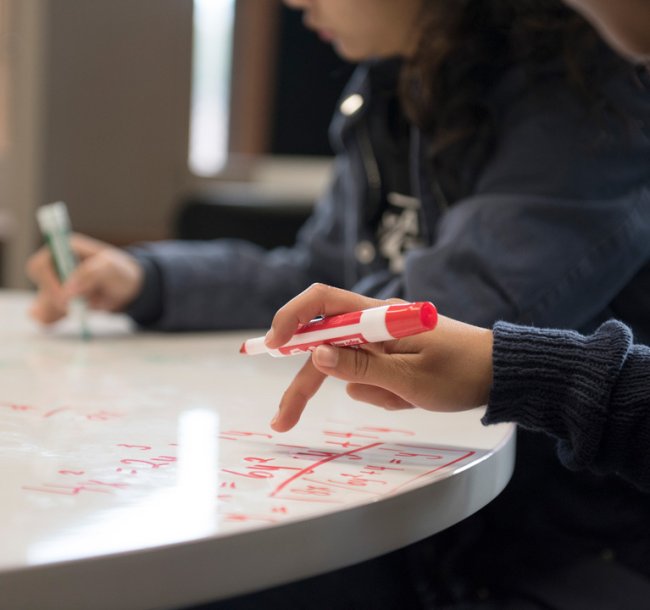
magic erase table

Mathematician / Researcher
Develop new theorems, models, and algorithms; publish results and advance mathematical knowledge

Data Scientist
Apply linear algebra, probability, and optimization to build, validate, and deploy predictive models

Quantitative Analyst (“Quant”)
Price risk and design trading/hedging strategies using stochastic calculus and numerical methods

Cryptography / Cybersecurity Specialist
Use number theory and algebra to design, analyze, and harden secure communication protocols

Operations Research Analyst
Optimize complex systems with mathematical programming, simulation, and decision theory

Actuary
Model uncertainty to price insurance/pensions and manage financial risk under regulatory constraints

Biostatistician
Plan experiments and analyze biomedical data; translate results into evidence-based conclusions

Secondary Mathematics Teacher
Teach proof, problem-solving, and mathematical thinking; mentor students toward STEM pathways

Explore More Career Outcomes

Saint Mary's Testimonials

Daniel Kao '22

“One of the things I enjoy about being a mathematics major is the sense of community that my peers and I form in our classes. In addition, this program has helped me develop into the kind of educator I aspire to be in the future.”

Daniel Kao, Class of 2022

School and Department Information