Health Science, BS

Health Science, BS

Jumpstart a career in helping people thrive.

This major will provide you with a unique interdisciplinary perspective on human health. Guided by our esteemed faculty, you’ll explore the structure and function of whole organisms (microbe, plants, animals) and the fundamentals of health—biological, chemical, physical, and psychological. You’ll hone your ability to reason through unfamiliar problems, the tools to investigate topics in-depth, and the communication skills needed to share information with others.  

With our small class sizes and numerous opportunities for clinical experience or hands-on research, you can make lasting connections in our tight-knit community of difference-makers.


Learn More About Our Health Science Program

Get to know our well-respected faculty and their specialties. Or explore scholarship opportunities and an array of research possibilities.

Curriculum

Health Science, BS

BS

Learning Outcomes

  • DEMONSTRATE understanding of the biological workings of the human body and its relevance to human health.
  • DEMONSTRATE a high degree of professional integrity and social awareness through consideration of social inequities and respect for the value of individuals, communities and perspectives of difference.
  • UNDERSTAND and practice scientific inquiry through observation and/or experimentation including logic of experimentation, data analysis and ethical implications.
  • ANALYZE, interpret, integrate and evaluate scientific literature with the ability to communicate findings in a written format.

Requirements

Lower Division

  • The following lower-division courses are required for the major.
  • General Chemistry I (4 units)
  • General Chemistry I Laboratory (1 units)
  • Intro Cell Bio, Molecular Bio, & Biochem (5 units)
  • Intro to Cell Bio, Molecular Bio Lab
  • Introduction to Organisms and Evolution (5 units)
  • Intro to Organisms and Evolution Lab
  • Intro Probability & Statistics (3 units)
  • Introduction to Psychology (4 units)
  • Take one lower-division science elective course with the corresponding lab.
  • Human Anatomy (5 units)
  • Human Anatomy Laboratory
  • Human Physiology (5 units)
  • Human Physiology Laboratory
  • OR
  • Anatomy and Physiology I (4 units)
  • Anatomy and Physiology I Lab
  • Anatomy and Physiology II (4 units)
  • Anatomy and Physiology II Lab
  • Take one lower-division science elective course with the corresponding lab.
  • Organic Chemistry I (4 units)
  • Organic Chemistry I Laboratory (1 units)
  • OR
  • General Chemistry II (4 units)
  • General Chemistry II Laboratory (1 units)
  • OR
  • General Physics I (4 units)
  • General Physics I Laboratory
  • Take one of the following Psychology courses.
  • Human Development (4 units)
  • Helping Professions: Foundations & Skills (3 units)

Upper Division

  • The following upper-division courses are required for the major.
  • Psychopathology (4 units)
  • Interpersonal Communication (3 units)

Health Writing Course

  • Take one of the following Health courses
  • Nutrition (4 units)
  • Environmental Health (4 units)

Upper-division Electives

  • Take at least 14 units from the following list. Some courses may require prerequisite courses that are not contained in the Health Science major. Courses not on this list may be allowed by petition to the Health Science Director.
  • Genetics (5 units)
  • Genetics Lab
  • Research Design and Biostatistics (5 units)
  • Research Design and Biostatistics Lab
  • Biochemistry (5 units)
  • Biochemistry Lab
  • Cell Biology (5 units)
  • Cell Biology Lab
  • Microbiology (5 units)
  • Microbiology Lab
  • Immunology (5 units)
  • Immunology Lab
  • Developmental Biology and Embryology (4 units)
  • Developmental Biology and Embryology Lab
  • Special Topics in Organismal Biology (3-4 units)
  • Internship in Biology (1-4 units)
  • Independent Study in Biology (1-4 units)
  • Field/Laboratory Research in Biology (1-4 units)
  • Women in Sport (4 units)
  • Sport and Exercise Psychology (4 units)
  • Community Health (4 units)
  • Global Impact of Physical Inactivity (3 units)
  • Structural Biomechanics (3 units)
  • Nutrition for Sport and Physical Activity (4 units)
  • Care and Prevention of Athletic Injuries (4 units)
  • Principles of Strength Training/Conditioning (4 units)
  • Prin of Strength Train/Condit Lab
  • Sport Sociology (3 units)
  • Health Promotion Planning & Evaluation (4 units)
  • Multicultural Health and Wellness (4 units)
  • Exercise Physiology (5 units)
  • Exercise Physiology Lab
  • Motor Learning and Control (4 units)
  • Fitness Assessment/Exercise Prescription (4 units)
  • Fitness Assess/Exercise Prescrip Lab
  • Internship (3-4 units)
  • Independent Study (3-4 units)
  • Psychobiology (4 units)
  • Psychobiology Lab
  • Cross-Cultural Psychology (3 units)
  • Cross-Cultural Psychology EL (1 units)
  • Human Sexualities (4 units)
  • Health Psychology (3 units)
  • Independent Study (1-4 units)
  • Fundamentals of Nutrition (3 units)
  • Intro to Public Health (3 units)
  • Intro to Public Health EL (1 units)
  • Nutrition (4 units)
  • Environmental Health (4 units)
  • Epidemiology (4 units)
  • Internship (3-4 units)
  • Independent Study (1-4 units)
  • Mentored Research (1-4 units)

What can you do with a degree in Health Science?

A degree in Health Science provides students with interdisciplinary preparation in biology, chemistry, psychology, and communication for roles across healthcare, public health, and research
(*Some careers may require additional certification or graduate study)
Image
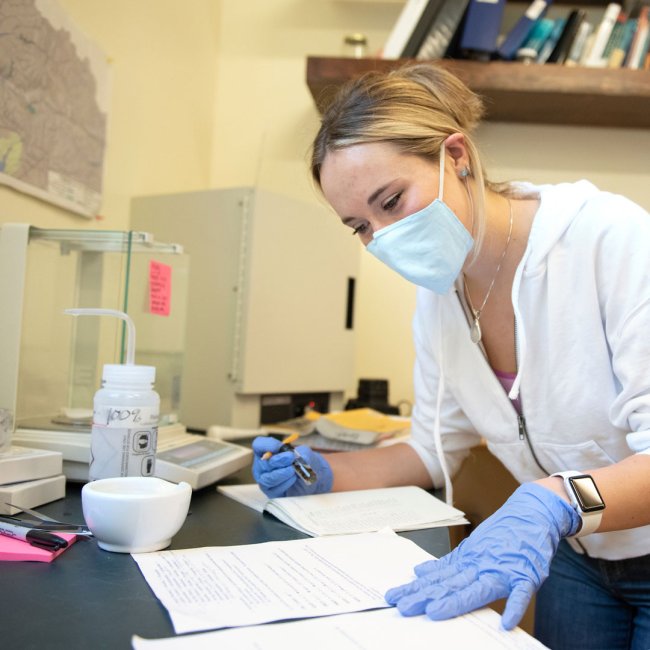
A public health student doing research

Clinical Research Coordinator
Oversee IRB compliance, recruit participants, schedule visits, collect data, and maintain protocol quality for clinical or translational studies

Health Data / Biostatistics Analyst
Use statistical methods to clean, analyze, and visualize health datasets to inform program design, quality improvement, and policy decisions

Community Health Specialist
Plan and deliver outreach, screenings, referrals, and navigation services while evaluating outcomes for diverse populations

Environmental Health Specialist (prep)
Investigate environmental exposures, conduct inspections, and support compliance reporting—often requiring state or REHS certification

Health Communication Specialist
 Translate scientific findings into clear patient education, digital campaigns, and provider communications that drive behavior change

Healthcare Operations / Administration Associate
Support scheduling, revenue cycle, accreditation, and quality initiatives to improve patient flow and clinic efficiency

Patient Care Technician / Medical Assistant (prep)
Take vitals, document in EHRs, and coordinate patient flow in ambulatory settings, typically with an added short-term certification

Rehabilitation / Exercise Specialist (prep)
Administer fitness assessments and implement exercise prescriptions under supervision, building toward PT/OT or exercise physiology graduate study

Pre-Professional Pathways (medicine, PA, PT, OT, nursing)
Complete prerequisites, gain clinical hours, and prepare for licensure-track graduate programs and professional schools

Saint Mary's Testimonials

“My experience as a health science major has opened my eyes to the wide range of career opportunities in the health field. Most importantly, the courses were beneficial for my future goals because they provided me with the knowledge and inspiration to help others be the best and healthiest version of themselves.”

Alyssa Vessel, '22

School and Department Information