
History, BA

History, BA

Historians examine the past to reimagine our future.

Our program will challenge you to think, read, and write about issues arising from the tensions societies face in every generation. You will progress through 2.5 million years of history, from the Paleolithic Era to the present day, engaging with the past through primary sources, hands-on research, and contemporary digital research methods

With our outstanding, approachable faculty as your guide, you will learn how to situate contemporary events within the context of the human narrative. As the culmination of your study, you will create an original work of historical research, employing the skills you have honed throughout your four years here. 

A history degree will equip you for any profession that requires research, analyzing documents and data, thinking critically, reading closely, making oral arguments, and writing persuasively.
 

Learn more about the program

Get to know our well-respected faculty and their academic specialties. Or explore scholarship opportunities and an array of internship possibilities.


Earn an History, BA and a Single-Subject Teaching Credential at Saint Mary's in just four years through our Single Subject Teaching Credential Integrated Pathway!

Learn More

History, BA

BA

History majors develop a unique set of skills designed for research and analytical thinking in a diverse and increasingly globalized world.

Learning Outcomes

  • SITUATE major historical events within their proper chronological, geographical, thematic, and comparative context.
  • THINK historically, read critically, write coherently, speak persuasively, and communicate effectively.
  • EXPLAIN the value and application of historiography and various historical methods, approaches and theories.
  • EVALUATE and critically assess the validity of historical evidence and interpretations.
  • IDENTIFY, INTERPRET, and APPLY primary and secondary sources to construct sophisticated, persuasive, and logical interpretations of historical problems and events.
  • CONNECT and INTEGRATE historical knowledge, grasp the ethical and moral dimensions of history, and appreciate the complex, multi-causal origins of past events.
  • DEVELOP historical empathy and RECOGNIZE the importance of differing voices to both Historical interpretation and understanding current events.

Requirements

Introductions to History

  • The following lower-division courses are required for the major.

U.S. History

  • Both classes in the Lower-Division U.S. History sequence are required.
  • US History to 1877 (4 units)
  • US History Since 1877 (4 units)

Global History

  • Take one course in the Global History sequence.
  • Global History to 1500 (4 units)
  • Global History Since 1500 (4 units)

Foundations in History

  • Take at least 3 units of Foundations in History at the 200-Level.
  • Explorations in Global History (3 units)
  • Explorations in U.S. History
  • Immigration and Ethnic Relations in US (3 units)
  • Comparative/Transnational US History (3 units)
  • U.S. Women's History (3 units)
  • U.S. Environmental History (3 units)
  • Explorations in Latin American History (3 units)
  • Environment in Latin American History (3 units)
  • Explorations in Medieval European History (3 units)
  • Western Cultures and Societies to 1500 (3 units)
  • Modern Medievalisms (3 units)
  • Explorations in Modern European History (3 units)
  • Revolt & Revolution in Early Modern Europe (3 units)
  • Women in Modern European History (3 units)
  • Health and Welfare in Modern European History (3 units)
  • Explorations in Asian History (3 units)
  • War and Peace in Modern Japan (3 units)
  • Revolutionary Movements in Modern China (3 units)
  • Explorations in African History (3 units)
  • Histories of Women, Gender, Sexuality (3 units)

Theory, Methods, and Writing in History

  • Take HIST 200 and 300.
  • The Historian's Craft: Methods and Practice (3 units)
  • Historiography: Debates & Interpretation (4 units)
  • Complete one Public History engaged learning experience. History 252EL and 302EL must be taken concurrently with the main course.
  • Modern Medievalisms - Engaged Learning (1 units)
  • History Mentors - Engaged Learning (1 units)
  • Public History - Engaged Learning (1 units)

Research Seminars in History

  • Take two Research Seminars in History
  • Research Seminar in U.S. History (3 units)
  • Research Seminar: The Sandinista Revolution (3 units)
  • Research Seminar: Environmental Disasters in Latin American History (3 units)
  • Research Seminar in Medieval European History (3 units)
  • Research Seminar: Modern European Hist (3 units)
  • Research Seminar: Fascism (3 units)
  • Research Seminar: Revolutions, Nations, Citizens (3 units)
  • Research Seminar: The Pacific War (3 units)
  • Research Sem: Cultural Revolution & Maoist Movements (3 units)
  • Research Seminar in African History (3 units)

Senior Thesis in History

  • Complete a Senior Thesis in History, or a Humanities Capstone course.
  • Capstone: Senior Thesis (2 units)

Diversity, Equity, Inclusion, & Belonging through History

  • The History major must also include at least one course in each of the following categories focusing primarily on amplifying underrepresented perspectives in History. These courses may double count in the requirements and electives listed above.

Race, Class, Gender, Ethnicity

  • Topics in Filipino / Asian American History (4 units)
  • Immigration and Ethnic Relations in US (3 units)
  • U.S. Women's History (3 units)
  • Women in Modern European History (3 units)
  • African American History to 1877 (4 units)
  • African American History Since 1877 (4 units)
  • California History (4 units)
  • Women in Latin American History (4 units)
  • Revolution in Latin America (4 units)
  • African Diaspora in Latin America (4 units)
  • Global Citizens and Subjects in the British Empire (4 units)
  • Ethnic Identity and Conflict in China (4 units)
  • Histories of Women, Gender, Sexuality (3 units)

Global & Transnational Perspectives

  • Explorations in Global History (3 units)
  • Explorations in Latin American History (3 units)
  • Environment in Latin American History (3 units)
  • Explorations in Asian History (3 units)
  • War and Peace in Modern Japan (3 units)
  • Revolutionary Movements in Modern China (3 units)
  • Explorations in African History (3 units)
  • Special Topics in Latin American History (4 units)
  • Revolution in Latin America (4 units)
  • African Diaspora in Latin America (4 units)
  • Drugs in Latin American History (4 units)
  • Special Topics in Asian History (4 units)
  • Environment in Asian History (4 units)
  • Special Topics in African History (4 units)
  • African History to 1850 (4 units)
  • African History Since 1850 (4 units)
  • Research Seminar: The Sandinista Revolution (3 units)
  • Research Seminar: Environmental Disasters in Latin American History (3 units)
  • Research Seminar: The Pacific War (3 units)
  • Research Sem: Cultural Revolution & Maoist Movements (3 units)
  • Research Seminar in African History (3 units)

Pre-1500

  • Global History to 1500 (4 units)
  • Explorations in Medieval European History (3 units)
  • Western Cultures and Societies to 1500 (3 units)
  • Modern Medievalisms (3 units)
  • Dark Ages (Birth of Europe) (4 units)
  • Gothic Era (Europe in the High Middle Ages) (4 units)
  • Renaissance Europe (4 units)
  • Warfare in the Middle Ages (4 units)
  • Research Seminar in Medieval European History (3 units)

Upper-division Requirement

  • Take additional 300- or 400-level History Courses to reach at least 22 units of upper-division History coursework. ES 305 and CORE 370 will also count for this requirement.
  • Global History to 1500 (4 units)
  • Global History Since 1500 (4 units)
  • Us History to 1877 (4 units)
  • US History Since 1877 (4 units)
  • The Historian's Craft: Methods (3 units)
  • Explorations in Global History (3 units)
  • Immigration & Ethnic Relations (3 units)
  • Compar/Transnat US History (3 units)
  • U.S. Women's History (3 units)
  • U.S. Environmental History (3 units)
  • Explorations in Latin Amer His (3 units)
  • Environment in Latin Am Hist (3 units)
  • Expl in Medieval Euro Hist (3 units)
  • Western Cultures and Societies (3 units)
  • Modern Medievalisms (3 units)
  • Modern Medievalisms EL (1 units)
  • Explor in Modern European Hist (3 units)
  • Revolt & Rev in Early Mod Euro (3 units)
  • Women in Modern European Histo (3 units)
  • Hlth & Welfare in Modern Euro (3 units)
  • Explorations in Asian History (3 units)
  • War and Peace in Modern Japan (3 units)
  • Revolutionary Mvmt Mod China (3 units)
  • Expl African History (3 units)
  • Independent Study (1-4 units)
  • Historiography (4 units)
  • History Mentors--Engaged Learn (1 units)
  • Public History (4 units)
  • Public History EL (1 units)
  • Special Topics in US History (4 units)
  • Colonial History of the U.S. (4 units)
  • Amer Revolution & Early Rep (4 units)
  • Civil War & Reconstruction (4 units)
  • American Empires (4 units)
  • America in the World (4 units)
  • Modern American Culture (4 units)
  • African American Hist to 1877 (4 units)
  • African Amer Hist Since 1877 (4 units)
  • California History (4 units)
  • Sp Top in Latin American Hist (4 units)
  • Women in Lat Am History (4 units)
  • Revolutions in Latin America (4 units)
  • African Diaspora in Lat Am (4 units)
  • Drugs in Latin American Hist (4 units)
  • Sp Top in Medieval Euro Hist (4 units)
  • Dark Ages (Birth of Europe) (4 units)
  • Gothic Era (Europe) (4 units)
  • Renaissance Europe (4 units)
  • Warfare in the Middle Ages (4 units)
  • Sp Top in Early Modern Histor (4 units)
  • Sp Top 19th C Euro Hist (4 units)
  • Sp Top 20th C European Hist (4 units)
  • German History (4 units)
  • Global Citizens and Subjects (4 units)
  • Cold War Europe in Global Pers (4 units)
  • Special Topics in Asian Hist (4 units)
  • Ethnic Ident & Cnflct in China (4 units)
  • Environment in Asian History (4 units)
  • Special Topics in African Hist (4 units)
  • African History to 1850 (4 units)
  • African History Since 1850 (4 units)
  • Research Seminar in U.S. Histo (3 units)
  • Rsrch Sem: the Sandinista Revo (3 units)
  • Rsch Sem: Envir Dis Latin Am (3 units)
  • Research Sem: Medieval Europe (3 units)
  • Research Sem: Modern Europe (3 units)
  • Research Seminar: Fascism (3 units)
  • Research Sem: Rev & Citizen (3 units)
  • Research Sem: the Pacific War (3 units)
  • Research Sem: Cultural Rev (3 units)
  • Research Sem: African History (3 units)
  • Internship (1-4 units)
  • Capstone: Senior Thesis (2 units)
  • Independent Study (1-4 units)

What can you do with a degree in History?

A History degree builds research, analysis, and writing skills for roles across education, public history, media, nonprofits, and policy. 
(*Some careers may require additional certification or graduate study)
Image
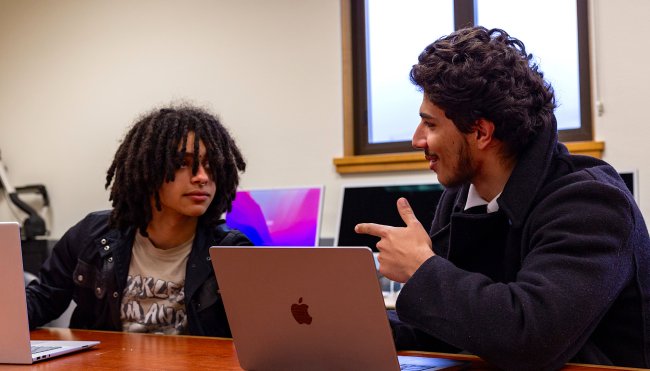
SMC students Jasper Pacheco ’27 and Luis Mora ’27 talking at table with computer for debate practice, 2024

Public Historian / Museum Professional (Archivist, Curator)
Preserve and interpret collections; design exhibits; manage archives and public programs.

Secondary History Teacher (Credential Track)
Teach standards-aligned curricula; assess learning; advise student activities.

Lawyer / Legal Professional (Pre-Law Track)
Prepare for law-related careers through intensive reading, research, writing, and argumentation (law school often required).

Nonprofit Program Manager
Plan and manage programs, budgets, partnerships, and impact reporting for mission-driven organizations.

Project Manager / Program Coordinator
Coordinate timelines, teams, and deliverables across organizations, agencies, or nonprofits.


Policy Analyst / Legislative Aide
Research bills and historical context; brief stakeholders; draft memos and recommendations

Journalist / Editor
Investigate issues, verify sources, and produce clear, evidence-based stories and copy.

Communications & Content Strategist
Translate complex history into accessible web, social, and long-form content for organizations.

Research Analyst (Think Tank / NGO)
Collect primary/secondary data; synthesize findings; produce reports and fact sheets

Testimonials

“Being a History major changed the way I view the world around me. Being a Saint Mary’s History graduate, I am confident in my abilities to think globally, converse eloquently, research responsibly, and write clearly.” 

Maryanne Cronin ’11

School and Department Information