MA in Communication - Curriculum

Overview
Built initially as an accelerated one-year program focused on strategic communication, our MA provides students from any undergraduate background with applied research experience and in-demand professional skills rooted in communication theory that give students a valuable and competitive edge in the post-graduate job market or when applying to PhD programs for further study.
Whereas we now offer a variety of different course plans that allow for student flexibility, our MA's commitment to a year-long research project remains true—our curriculum and small-cohort model challenges students to work towards a longform piece of academic and professional work while receiving support from faculty and other students along the way.
Course work for the MA in Communication program consists of five required core courses, four cross listed electives, and one of two options for a final "capstone" culminating experience. Students will complete a total of nine courses (35 Carnegie units). The core courses are designed to build mutually complementary competencies that are augmented by the electives and brought together in either a comprehensive exam or an internship/externship experience in June of the final year.
Course Descriptions
Core courses are offered in a hybrid format (meaning some class periods may be conducted on Zoom) while electives will be offered fully in-person. Due to our multidisciplinary nature and the varied academic backgrounds of our students, there are minor variations in pathways for completion with potential elective options in other disciplines based on each student's interests and professional goals
COMM 600: Theories of Communication
This is an introductory course to the graduate program in the field of Communication. This course attempts to prepare students for their graduate work by introducing the history of the field and the position of Communication in relation to other sub-fields. Students will also learn the academic writing convention of the discipline, get introduced to relevant campus resources (library, Canvas, etc.), and set up their personal portfolio space.
COMM 602: Strategic Mediated Communication
This course examines media and mediated forms of communication as they intersect with cultural, economic, political or social contexts. The focus is on both the analysis and strategic use of mediated communication for various occasions, including development, social change, crisis response, corporate/organizational digital presence, and social justice. The course integrates both critical and practical approaches to understanding effective mediated communication.
COMM 605: Applied Research Design
This course is designed to focus on methods of data gathering. In this course, students will learn designs of quantitative and qualitative research, such as experiment, survey, interview, participant observation, and ethnography. Students gain research design experience by designing a project to address a particular communication phenomenon, and the importance of proper research design for professional applications, including project or training assessment and evaluation. Each student’s proposed research project will be executed in the Applied Research Methods course.
COMM 606: Applied Research Methods
This course prepares students to collect data for a research project using both quantitative and qualitative methods. The primary foci include experiment, survey, interview, participant observation, and ethnography. Continuing from the Applied Research Design course, students will collect data from the previous semester’s project designs, gaining experience in a variety of methods as well as how to work in research teams.
COMM 607: Applied Research Analysis
This course prepares students to analyze a research project using both quantitative and qualitative data analysis. The primary foci of data analysis include (M)ANOVA, regression, and mediation and moderation analysis for quantitative survey data and coding based on the grounded theory approach for the qualitative data. Continuing from the Applied Research Methods course, students will analyze the data and interpret and report the results.
COMM 558: Topics in Film - Brazilian Film
This is an interdisciplinary and cross-cultural course where we will emphasize the socio-economic and political issues that gave rise to specific movements – Third Cinema, Cinema Novo and New Brazilian Cinema and travels through a more recent contemporary cinema. This course is designed to introduce the students to the cinematic work of a number of Brazilian film artists, and to develop a more detailed and creative reception of each film. By studying Brazilian cinema, students will learn about cinematic traditions and cultural realities significantly different from their own. They will acquire knowledge of the social, cultural and political issues that have shaped these traditions, as well as develop a deeper understanding of the aesthetic forms and film theories that have defined this cinema both in the past and in the present. Students will also become familiar with important approaches to studying film, for example the idea of national cinemas and cinema of resistance.
COMM 560: Communication and Social Justice: Whiteness
This course explores whiteness, communication, and culture broadly. As such, we will explore how whiteness is interrelated with communication, rhetoric, culture, identity, ideology, interpretation, etc. More specifically, we will explore what we mean by “whiteness,” social construction of whiteness, white fragility, white identity, cross-racial dialogue, histories of whiteness, black perspectives on whiteness, James Baldwin’s work on whiteness, whiteness as a strategic rhetoric, rhetorical strategies of whiteness, white rhetorics of crime/prison, whiteness and media, rhetorics of white backlash/disadvantage/victimization/affirmative action, whiteness and the far right, and white anti-racism/anti-racists.
COMM 564: Health Communication
This course introduces students to the principles, theory, and practice of health communication. Emphasis is placed on understanding the communication process as it pertains to health communication in various contexts: patient-provider communication, health communication theories, strategic planning for health campaigns, social media and health concerns (e.g., privacy), community-based healthcare strategies (i.e., strategic, intercultural, patient/provider, family, etc.). Students develop critical thinking skills, refine real-world application skills in the health context, and understand the dynamic roles of health communication in diverse situations.
COMM 570: Group Facilitation and Leadership
This course focuses on the development of group facilitation and critical thinking skills for making ethical decisions in diverse organizational, professional, and personal settings. Topics covered in this course include leadership, communication, theories of power, interpersonal dynamics in teams and groups, listening abilities, perspective-taking, practical discussion facilitation, skill building, understanding organizational structure and decision-making processes.
Other previously offered electives include:
COMM 506: Intercultural Communication
COMM 532: Audio Production
COMM 533: Video Production
COMM 544: Community Media
COMM 561: Communication and Social Justice: Black Farmers
COMM 563: Data Science for Communication in Real World Contexts
COMM 565: Social Media and Society
COMM 581: Television Criticism
Externship (local or international)
This culminating experience synthesizes and builds upon the competencies learned in the MA courses. Students choosing an externship spend two weeks in preparation and two weeks on-site (international or domestic) to conduct an applied research project as a group. Site preference, whenever possible, is given to Lasallian partner organizations working in international settings. Students act as consultants and assist the client organization in the development and execution of a data-driven research project. The cost of travel for this course is not included in tuition. International sites are $4500 and domestic sites are up to $500.
Examples of previous partnership experiences led by the program include:
- De La Salle College, Thessaloniki, Greece
- Centro Bartolomé de las Casas/Colegio Andino, Cusco, Peru
Comprehensive Exam
Students who choose this option complete a 6 hour exam in June split between questions drawn from the core classes and a bibliography of texts chosen by the student that reflect the elective courses and areas of emphasis completed by the individual student for the degree. Students will defend the answers to their exam in a one hour presentation with faculty from the program. There is no extra cost for this option.
Bridge Courses Can Save Time and Money
All of our Comm grad students have to take four electives—or Bridge Courses—during their time in the program and these classes allow students to personalize their work while exploring other diverse areas of communication like cultural studies, rhetoric, law, television/film criticism, and media production. Furthermore, these cross-listed classes "bridge" the gap between grad and undergrad as they include undergrads, grad students, and undergraduates taking the course for graduate-level credit.
Current Saint Mary's students have the opportunity to complete two of these electives during their time in undergrad, saving them time and money if they choose to join the graduate program. Successful completion of these classes also gives students from all majors and backgrounds a better sense of the kind of work they'd be doing in a Comm-focused grad program.
As a reminder, taking two Bridge Courses as an SMC undergrad then transferring them into the graduate program can save students over $9,000 in tuition costs overall while also reducing per-semester workload.
Bridge Course Options for Fall 2026
COMM 518 – Communication, Policy, and Law (T/TH – 3:20-5:00pm – Ellen Rigsby)
COMM 563 – AI in Society: Communication, Critique, and Professional Practice (T/TH – 11:40am-1:20pm – Aaron Sachowitz)
Bridge Course Options for Spring 2027
COMM 561 – Communication and Social Justice: Drag (T/TH – 9:50-11:30am – Scott Schonfeldt-Aultman)
COMM 582 – Race and Representation (T/TH – 8-9:40am – Samantha Joyce)
COMM 583 – Media and Relationships (M/W/F – 10:40-11:45am – Veronica Hefner)
We Meet Students Where They Are
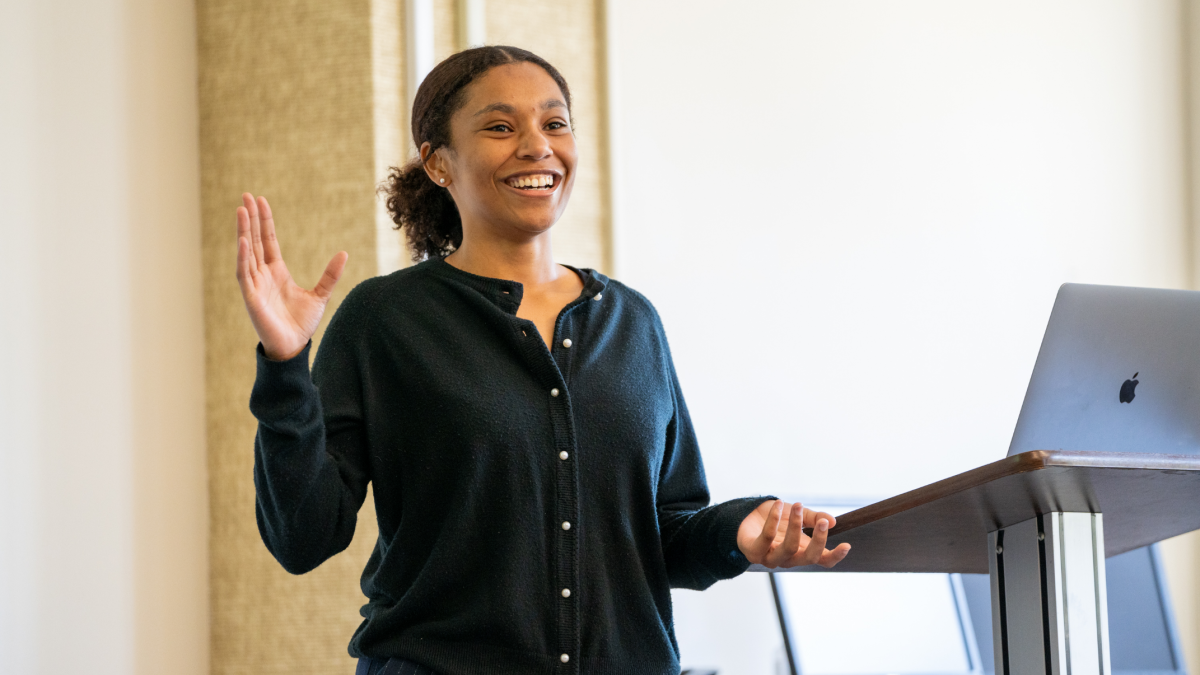
Whereas the Fall semester marks the official start of new one-year MA in Comm cohorts, the program can also arrange for longer-term course plans of either 1 ½ years or two years that allow prospective students to lessen the workload of the research component of the program—this involves taking one or more of our Bridge Course elective courses in the semesters leading up to the start of the program.
We are always happy to try and accommodate the needs of prospective students, so please reach out to Collin Skeen at cas38@stmarys-ca.edu for more information.
Sample Course Plans
Pathway 1: Current St. Mary's Student
During Undergraduate Career
Two cross listed upper division electives (4 units each). One each semester of senior year is recommended.
Note: not all upper division COMM electives are eligible for cross listing. Consult a faculty advisor.
+1 Graduate Year
Fall
COMM 600: Theories of Communication (4 units)
COMM 605 Applied Research Design (4 units)
1 Bridge Course electives (4 units)
January Term
COMM 606 Applied Research Methods (3 units)
Spring
COMM 602 Strategic Mediated Communication (4 units)
COMM 607 Applied Research Analysis (4 units)
1 Bridge Course elective (4 units)
June Term
Either Comprehensive Exam or Externship
Pathway 2: External Applicant or Returning St. Mary's Student
During Entry Summer
1 Bridge Course elective; for example, Comm 570: Group Facilitation and Leadership (4 units) (optional to lessen courseload in Spring)
Graduate Year
Fall
COMM 600: Theories of Communication (4 units)
COMM 605 Applied Research Design (4 units)
2 Bridge Course electives (8 units)
January Term
COMM 606 Applied Research Methods (3 units)
Spring
COMM 602 Strategic Mediated Communication (4 units)
COMM 607 Applied Research Analysis (4 units)
1 Bridge Course elective (4 units)
June Term
Either Comprehensive Exam or Externship
In addition to accommodating students from other undergraduate institutions and those following different degree paths, our MA in Communication also provides flexibility for students looking to start the program in Spring.
One major benefit of this pathway is the ability to take two of the required Bridge Course electives in the Spring before formally starting the one-year program. In addition to helping students acclimate more gradually to our Graduate Comm program, this pathway also allows students who did not take Bridge Courses in undergrad to lessen their overall workload during the research-intensive portions of the program.
Spring (8 Units Total)
Bridge Course—Cross listed elective (4 units)
Bridge Course—Cross listed elective (4 units)
Fall (12 Units Total)
COMM 600: Theories of Communication (4 units)
COMM 605: Applied Research Design (4 units)
Bridge Course—Cross listed elective (4 units)
Jan Term (3 Units Total)
COMM 606: Applied Research Methods (3 units)
Spring (12 Units Total)
COMM 602: Strategic Mediated Communication (4 units)
COMM 607: Applied Research Analysis (4 units)
Bridge Course—Cross listed elective (4 units)
June Term (0 Units Total)
COMM 691: Comprehensive Exam or COMM 690: Intercultural Externship (0 units)
Grand Total: 35 Units
Students looking to stretch the program to two years of coursework will take two Bridge Courses during the Fall and Spring of their first year followed by the sequence of 600-level courses in their second year.
Bridge Course—Cross listed elective (4 units)
Bridge Course—Cross listed elective (4 units)
Fall 2026 (8 units)
COMM 606: Applied Research Methods (3 units)
Spring 2027 (8 units)
COMM 602: Strategic Mediated Communication (4 units)
COMM 607: Applied Research Analysis (4 units)
June Term 2027 (0 units)
COMM 691: Comprehensive Exam or COMM 690: Intercultural Externship (0 units)
Work with Faculty Who Care
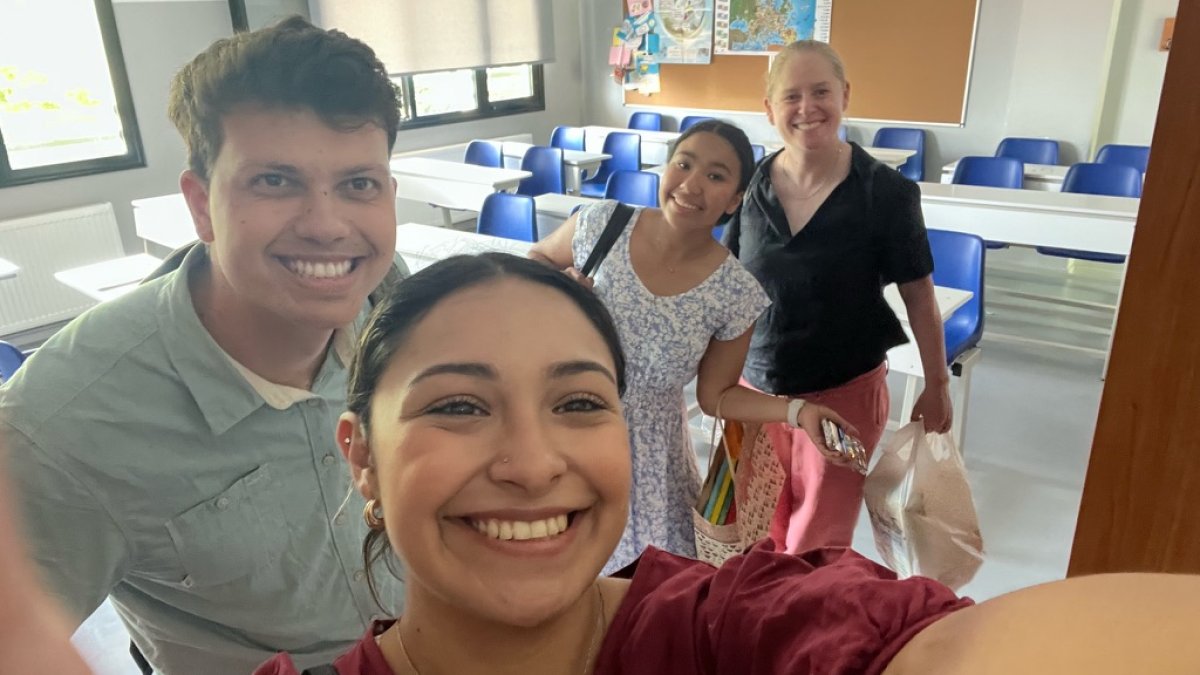
At Saint Mary's, our commitment to providing a student-focused and Lasallian education is embodied, in part, through focused mentorship and support from faculty and staff—not only do our MA in Comm faculty have distinguished research backgrounds and decades of teaching experience, but they are also concerned with meeting each student where they are in the hopes of helping them get where they want to be.
School and Department Information
Veronica Hefner, Ph.D.
Program Director, MA in Communication
vh10@stmarys-ca.edu
Collin Skeen
Assistant Director of Admissions and Recruitment
cas38@stmarys-ca.edu
925-631-4190