Walking The Quiet: A Collaborative Commission by Zach Clark

Walking The Quiet:
A Collaborative Commission by Zach Clark
On view February 12 through June 21, 2026
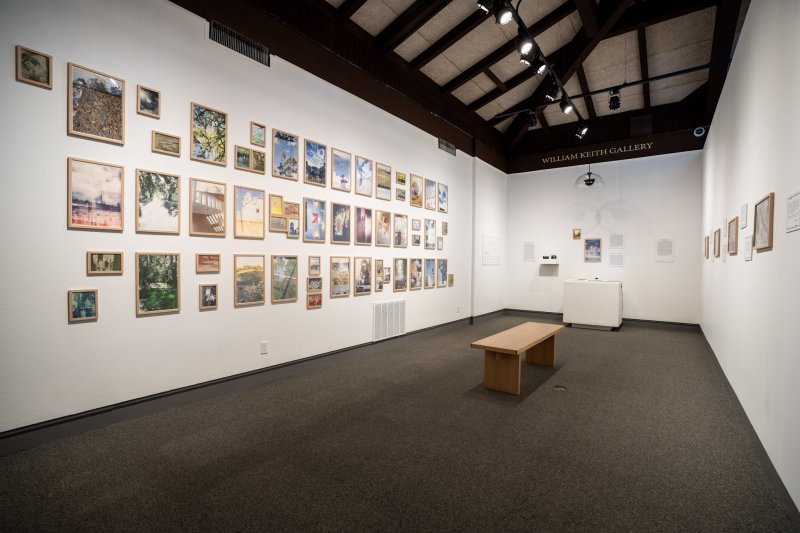
Zach Clark (b. Denver, Colorado, 1983; based in Oakland, California) explores locational memory through the media of printmaking, photography, and publication. Drawing on archival material, interviews, and site-specific research, Clark recorded and processed multiple perspectives across the Saint Mary’s College of California campus (SMC) to explore select sites of the landscape, reflecting SMC culture and lore. Walking The Quiet embodies this collective process through the commission's experimental nature and the printed matter produced.
From the outset to completion, multidisciplinary practices nurtured student voice through this collaboration. In Spring 2025, SMC students in the museum practicum course Acquiring Art voted Clark for an art commission, a selection process that served as the final project of the student-led acquisition proposal. Once selected, the museum paired Clark’s commission with SMC Engaged Learning (EL) in the Fall semester course, Intercultural Interfaith Leadership. From September through December, Clark met with these students to discuss place, lore, and belonging on campus. Based on these conversations, students were broken into groups to explore, research, and photograph selected sites of the SMC landscape. Students were asked to consider how these campus entities came into being, shifted, and persisted over time. How does a place embody diverse meanings reflective of different perspectives?
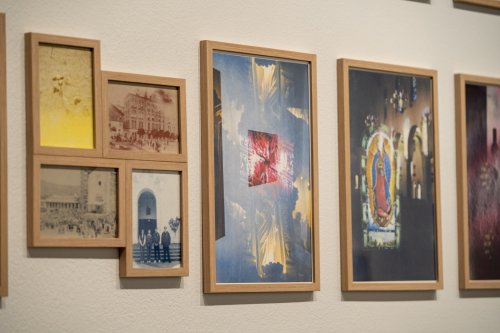
Exemplified in photographic prints, Clark’s Walking The Quiet visually imbues the oracular perspective of these students as they explore the SMC landscape. The 63 prints created contain images of 35 mm film photographs captured by students, rephotographed by the artist, referenced to archival images, and printed through spot colored stencils of the risograph. Through these processes, time elapses –– inviting the viewer to behold individual perspectives and narratives collected at precise moments, yet removed from their specific time – blurring location, seasons, and generations to convey landscape as collective memory.
––
Walking the Quiet reflects the perspectives of many voices and is collaboratively created and organized by Zach Clark, britt royer, Désirée Sturrock, and Dr. Porsia Tunzi. This exhibition highlights student voices from Fall 2025's Intercultural Interfaith Leadership course and Spring 2025’s Acquiring Art course. Additional support comes from the SMC archive, staff, and faculty. Thank you.
Through The Lens
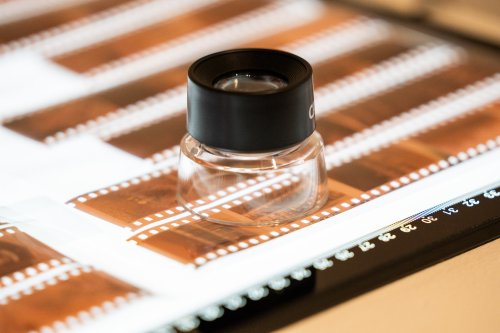
Clark prioritized the student perspective by adopting a collaborative approach. Students were organized into teams to investigate designated sites, including the library, the redwood grove, and the athletic fields, as well as to engage with broader landscape concepts and experiences, such as hiking to the cross and interacting with nature. Each team received a disposable camera to document both the site and their presence there. After collecting the cameras, Clark removed the film, intending to reshoot the sites on the same film. Over the remaining weeks of the semester, he revisited these locations and photographed them from his perspective, unaware of the specific images each group had previously captured. Upon developing all rolls, Clark sifted through over 400 photographs, identifying serendipitous exposures that marked an aesthetic blend of the two perspectives. He then selected and juxtaposed materials from the SMC archive with single-frame images documenting students’ involvement in the project. By contextualizing the collective understanding of place, these additional images convey the site’s imbued memories from past to present. Once all images were selected, photographs were digitally scanned and prepared for riso printing.
Risograph
A risograph, or riso printing, is a stencil-based, eco-friendly printing method that blends elements of screen printing and photocopying. The image is digitally scanned, then converted to grayscale. Next, the machine burns tiny holes in a thin paper stencil (master) for each color layer. The master is wrapped around a drum that holds a specific ink color (such as Sky Blue, Fluorescent Pink, Sunflower, & Midnight). Paper is fed through, and ink is pushed through the stencil onto the paper as the drum rotates. For multi-color prints, the printmaker switches ink drums and repeats the process, layering colors for rich effects. During the printing process, photographs shift and transform into unique images, in part due to the idiosyncrasies of machines originally designed for office printing. Most fundamentally, the unique and limited color palette of riso printing requires each printer to choose which spot colors to use, rather than relying on the traditional CMYK process.
Why ‘Walking The Quiet’?
Approaching Saint Mary’s College (SMC) as an external observer, Clark engaged with students primarily through inquiry and attentive listening. Throughout these interactions, a recurring theme emerged: the campus’s peaceful and quiet atmosphere. Students frequently contrasted their commutes, marked by the noise of the Bay, traffic, and regional activity, with the campus’s distinctive calm. They described the quiet not merely as an absence of sound, but as a defining sentiment that shaped their experience of place within the physical landscape. During one interview, a student described their experience as ‘walking the quiet,’ a phrase that subsequently informed Clark’s approach to exploring the campus and understanding these perceptions.