
Recognizing Coach Miles McAfee, a Boundary-Breaking Champion of ‘Hard-Nosed Baseball’
The first Black D-1 baseball head coach at a non-historically Black institution. The program’s winningest coach for decades. And a mentor to numerous players. At a pregame ceremony on April 18, Coach Mac’s jersey will be officially retired.
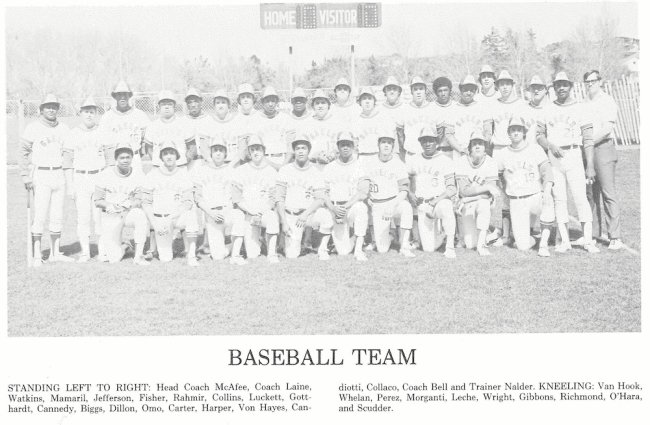
In his eight years at Saint Mary’s, Miles McAfee made all manner of history. Hired in 1972, he was the first Black Division I baseball coach at a non-Historically Black College or University (HBCU). He led the program until 1980 and became the program’s winningest coach ever—a distinction that held until only last year. Along the way, in 1977, after multiple successful seasons, McAfee led the Gaels to 41 wins, a program record that still stands.
Of course, all that groundbreaking is clearer in hindsight. To players like Christopher Major ’83, who came to Saint Mary’s in 1979, McAfee was simply “Coach Mac.” Only since graduating has Major come to really grasp McAfee’s impact.
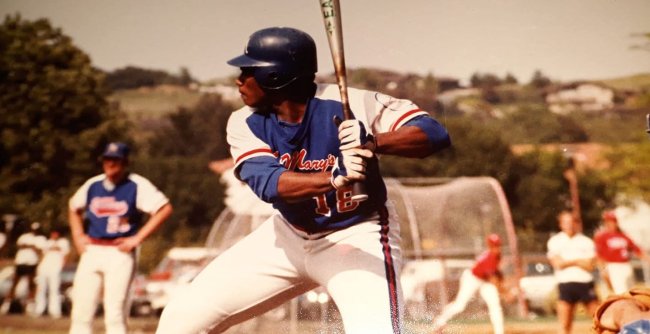
“He represented, for Black males like me and all of us who came to Saint Mary’s, the spirit of Saint John Baptist de LaSalle,” Major says. “The Lasallian mission was totally in line with what Miles was doing.” In the years since McAfee’s death in 2009, Major has pushed for greater recognition of the coach, helping to secure his induction into SMC’s Athletic Hall of Fame in 2012.
Now, thanks in part to the efforts of Major, High Potential Program founding director Tom Brown, and SMC’s current (and now winningest) baseball head coach Eric Valenzuela, McAfee’s legacy will be further cemented. In a ceremony before the game on April 18, his No. 11 jersey will be officially retired.
In a message to the campus, President Roger Thompson honored McAfee’s accomplishments and invited the community to attend the ceremony. “Dr. McAfee’s story is also an important part of our broader history—one that calls us to recognize those whose contributions may not always have received the visibility they deserved,” Thompson said. “In honoring him now, we affirm both the impact he made and the values he represented.”
“I coach to win”
Born in 1932, McAfee grew up in Atlanta's Buckhead neighborhood—a more rural, working-class part of town then, as opposed to the wealthy community it is now. McAfee’s father was a horse trainer, and for a while, McAfee considered becoming a jockey. “In that area, my size betrayed me,” he wrote in his 2003 memoir, Four Generations of Color. He was too big to ride racehorses. “But I was just the right size for baseball, my true sports love.”
In 1952, McAfee enrolled at Tuskegee Institute (now Tuskegee University) and graduated with a degree in Physical Therapy. He went on to play for the Pittsburgh Pirates organization for a season and later became a scout for the team. After 12 years with the Pirates, McAfee pivoted to coaching. The decision brought him to Saint Mary’s at a critical moment.
In February 1972, during a basketball game against Santa Clara University, five Black players walked out to protest the firing of Odell Johnson ’58, the popular Dean of Students and the first person of color to serve as an administrator at SMC. That March, following the firing of four Latino faculty members, student protestors occupied and fasted in the Saint Mary’s Chapel. They called for numerous changes to the College, including increasing the number of faculty and staff of color to better “meet the cultural, personal, and academic needs of Black and Chicano students.”
Deane Lamont, a professor of Kinesiology at Saint Mary’s, has researched and written extensively about the history of Black student-athletes at the College. “We could argue that McAfee’s hiring was a consequence of the 1972 protests,” Lamont says. “Certainly, he benefited from the activism of students who really put it all on the line.”
Settling into Saint Mary’s was a stark adjustment for McAfee. “I had played at a historically black college in the deep South, and was now coaching at a small, Catholic college in northern California, with a very small minority enrollment, and coaching a sport that had never had a black coach and had only a tiny fraction of black players,” he later wrote. In his memoir, he was frank about the racism and animosity he encountered—from opposing teams, but also some parents, students, and colleagues.
“He represented, for Black males like me and all of us who came to Saint Mary’s, the spirit of Saint John Baptist de LaSalle. The Lasallian mission was totally in line with what Miles was doing.”
—Christopher Major ’83
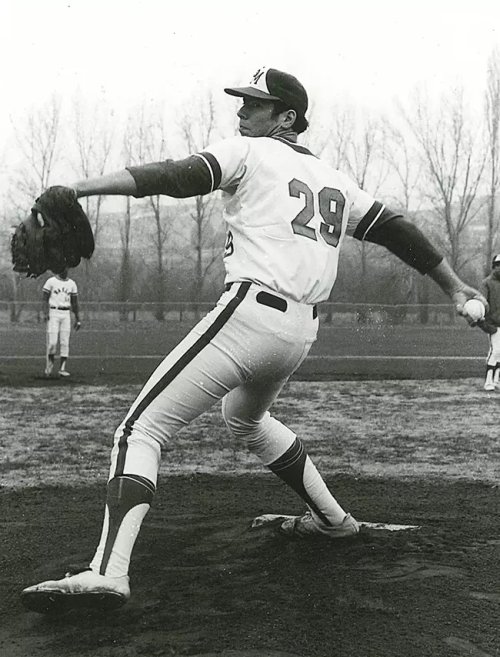
Against these headwinds, McAfee made baseball his priority. “I had a specific coaching philosophy—I coach to win, not to patronize,” he wrote. Within a matter of years, he established the Gaels as a nationally-ranked program, reaching as high as 10th in the country. Dozens of his players signed professional contracts, and in just eight years of coaching, five of his players went on to the major leagues.
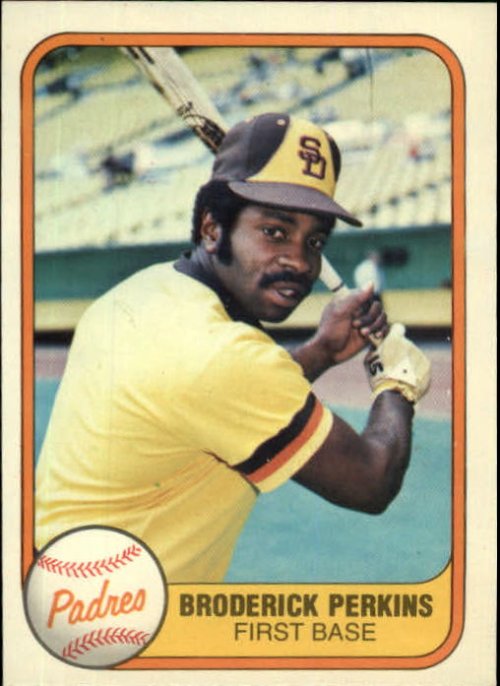
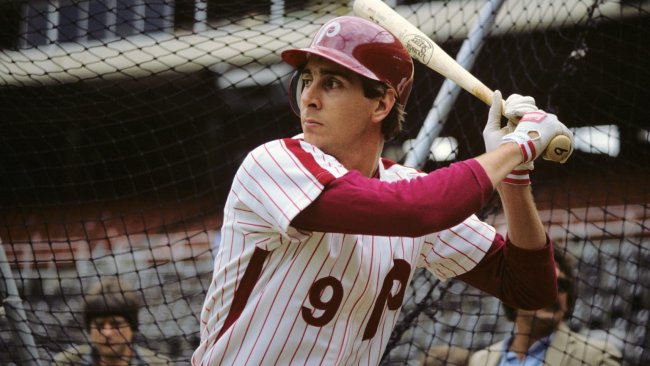
There was knuckleball pitcher Tom Candiotti, who debuted with the Brewers in 1983 and spent more than 15 years in the majors, earning a spot in the top 100 players ever with Cleveland. There was All-Star Von Hayes, who enjoyed a dozen years in the majors, was part of the Phillies when they won the pennant in 1983, and in 1986 led the National League in runs, doubles, and base hits. And there was infielder Broderick Perkins, who played five seasons with the Padres.
Lasallian Ball
Christopher Major’s time with Coach Mac was brief but life-altering. Growing up in the Bay Area community of Hayward, Major was a talented football quarterback and baseball outfielder at Moreau High School. But his grades were lacking, as was his sense of direction. “I was going nowhere,” he says.
But that all changed in 1979. On the day Major’s baseball team played De La Salle High School, McAfee was in the stands. It was a good day for Major, who remembers going two for four with two RBIs and throwing two players out, one at the plate and one at third.
“Miles was recruiting two other guys from De La Salle, and he saw me, a Black kid out in the field,” he recalls. “And Coach went, ‘Hey, who’s that guy?’ He liked the fact that I ran well, played solid defense, and was solid at the plate.” McAfee soon spoke to Tom Brown, director of High Potential—the Saint Mary’s program established earlier that decade to support first-generation and low-income students. “He told Tom that I was a good candidate for High Potential.”
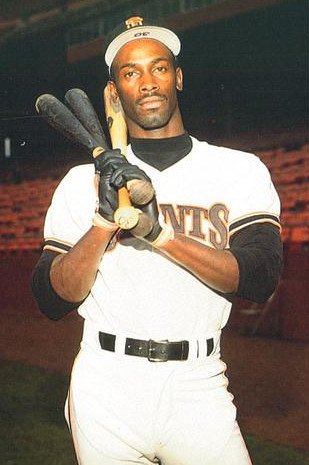
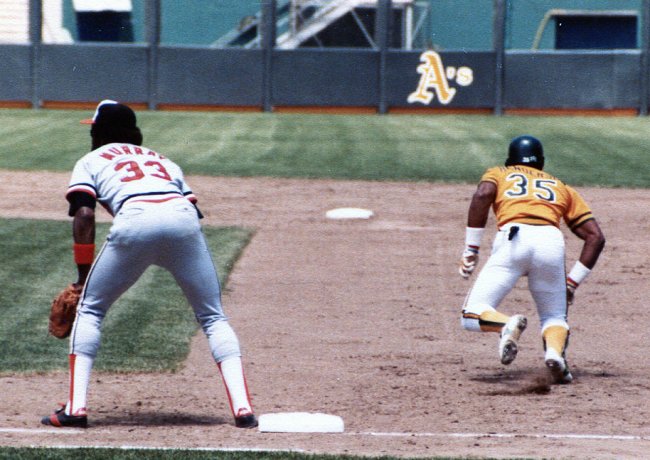
McAfee soon recruited Major to join the Saint Mary’s travel team for the 1979 season. It proved to be McAfee’s last year at SMC. After earning a PhD in Business Law, McAfee left Saint Mary’s in 1980 to become a sports agent, founding Golden Gate Sports Management. McAfee spent the next few decades there as President and CEO, retiring in the 2000s. Among the players he represented were Chili Davis, who enjoyed a 19-year career in the majors, most with the San Francisco Giants. And he represented Rickey Henderson, aka “The Man of Steal,” who holds multiple Major League Baseball records, including stolen bases and runs, and who clocked a quarter century in the majors, including four stints with his original team, the Oakland A’s.
Christopher Major continued on with Saint Mary’s baseball after McAfee’s departure, and he graduated with a degree in Business and Economics. Only in recent years, as he served disadvantaged students through his nonprofit Hayward Youth Academy, has Major come to recognize how powerfully and positively McAfee affected his trajectory.
“There was no one in the history of college baseball at that time who was making an emphasis to find young Black men like myself,” he says. “But Miles went out to the local schools and middle-class communities. He got the best talent, but he also was a guy who said, ‘You can make it through Division 1 baseball and obtain a college degree.’”
Major, who will throw the first pitch at the April 18 game, has been heartened to see McAfee being honored now. He’s been overwhelmed to see the outpouring of appreciation for Coach Mac on social media, too. “This guy was somebody that did something for me, and I didn't even really know him that well,” he says. “And now I can see it's not just me that he touched. It's a multitude of players, of every background.
“He didn’t care if you were Black or white or Latino. All he cared about, really, was that you played hard-nosed baseball.”
A Ceremony on Saturday
The ceremony retiring Miles McAfee’s No. 11 jersey will take place at 12:45 on Saturday, April 18, before the Gaels host Gonzaga. First pitch is scheduled for 1 p.m. at Louis Guisto Field at Brother Ronald Gallagher Stadium. Tickets to the game are available here.
Saint Mary’s has also established the Miles McAfee Endowed Scholarship to support the Saint Mary's College Baseball program. All gifts are fully tax-deductible and enable the Baseball program to recruit and retain talented student-athletes.
Hayden Royster is Associate Editor of the Saint Mary's College Office of Marketing & Communications. Write him.


