Communication: Media Studies, BA

Communication: Media Studies, BA

We designed the Media Studies Concentration for students eager to make an impact in our increasingly mediated age. As the name suggests, our program will prepare you to create engaging, irresistible works of media. Whether you’re interested in print, visual, advertising, video and audio production, digital and social media, or all of the above, our faculty is committed to equipping you to reach your unique goals. Beginning with the fundamentals of media creation, you’ll learn to analyze media in various contexts, assess its potency, and start to grow your portfolio of work.

You will leave this major well-qualified for a career in our ever-growing media landscape.

Apply Now Request Info

Learn More About Our Program

Get to know our outstanding faculty and their specialties. Or explore on-campus clubs and opportunities, like our debate team and student-run radio station, along with an array of internship possibilities.

Curriculum

Communication: Media Studies Concentration, BA

BA

The Media Studies concentration is for students interested in examining processes of media communication. This concentration balances critical, historical, analytical, and theoretical approaches to the study of media with an introduction to hands-on media production training, culminating in a media-focused Capstone project. The Media Studies concentration provides students with competencies in the critical study and praxis of media, including visual studies and design, cinema and video, podcasting/audio and radio, and digital media in addition to qualitative, textual, and rhetorical methodologies.

Learning Outcomes

  • PLO 1: Recognize communication inquiry by employing communication perspectives, principles, or concepts.
  • PLO 2: Create messages appropriate to the audience, purpose, and context in order to effectively communicate.
  • PLO 3: Apply communication theories or methods to critically analyze messages.
  • PLO 4: Demonstrate the ability to appraise and apply communication ethics for social justice, to embrace difference, and to exercise moral conduct.
  • PLO 5: Practice using communication theory, strategies, and methodologies in real-world situations.

Requirements

Required Courses

The following courses are required for all Communication majors:

  • Intro to Media & Cultural Stud (4 units)
  • Intro to Human Communication (4 units)
  • Rhetoric and Public Discourse (3 units)
  • Communication Theory (3 units)

Media Studies Concentration

The following courses are required for the Media Studies concentration:

  • Media, Technologies, & Culture (4 units)
  • Media Research Methods (4 units)
  • Capstone: Media Studies (3 units)

Internship

One unit of an internship is required

  • Internship (1-3 units)

Earn an Communications: Media Maker, BA and a Single-Subject Teaching Credential at Saint Mary's in just four years through our Single Subject Teaching Credential Integrated Pathway!

Learn More


  • Interpers Com(lower) (1 units)
  • Intro to Media & Cultural Stud (4 units)
  • Intro to Human Communication (4 units)
  • Rhetoric and Public Discourse (3 units)
  • Communication Theory (3 units)
  • Topics in Communication (200s) (3-4 units)
  • Ind/Special Study (200s) (1-4 units)
  • COMM Elective (1-5 units)
  • Qualitative Methods (3 units)
  • Understanding Digital Culture (3 units)
  • Intercultural Communication (4 units)
  • Visual Communication (4 units)
  • Quantitative Methods (4 units)
  • Interpersonal Communication (3 units)
  • Rhetorical Criticism (4 units)
  • Advertising & Civic Engagement (4 units)
  • Public Relations (4 units)
  • Communication Policy and Law (4 units)
  • Fundametals of Journalism (4 units)
  • Sports Journalism (4 units)
  • Photojournalism (4 units)
  • Media, Technologies, & Culture (4 units)
  • Media Research Methods (4 units)
  • Topics in Media Production (3-4 units)
  • Topics in Communication (300s) (3-4 units)
  • Group Facilitation/Leadership (4 units)
  • Media Labs (1 units)
  • COMM UD Elective (1-5 units)
  • International Communication (4 units)
  • Political Communication (4 units)
  • Multimedia Journalism (4 units)
  • Adv Topics in Media Production (3-4 units)
  • Persuasion (4 units)
  • Topics in Film (4 units)
  • Communication & Social Justice (4 units)
  • Communicat & Soc Justice EL (1 units)
  • Topics in Communication (400s) (3-4 units)
  • Health Communication (4 units)
  • Television and Cultural Critic (4 units)
  • Race and Representation (4 units)
  • Capstone: Comm Studies (3 units)
  • Quantitative Capstone Lab (1 units)
  • Capstone: Media Studies (3 units)
  • Internship (1-3 units)
  • Ind/Special Study (400s) (1-4 units)
  • Intercultural Communication (4 units)
  • Political Communication (4 units)
  • Visual Communication (4 units)
  • Intergroup Communication (4 units)
  • Rhetorical Criticism (4 units)
  • Advertising & Civic Engagement (4 units)
  • Public Relations (4 units)
  • Communication, Policy and Law (4 units)
  • American Journalism (4 units)
  • Sports Journalism (4 units)
  • Audio Production (4 units)
  • Video Production (4 units)
  • Adv Topics in Media Production (4 units)
  • Community Media (4 units)
  • Persuasion (4 units)
  • Topics in Film: Brazilian Film (4 units)
  • Comm & Soc Justice: Whiteness (4 units)
  • Communication & Social Justice (4 units)
  • Communication Strategy (4 units)
  • Topics in Communication (3-4 units)
  • Health Communication (4 units)
  • Social Media & Society (4 units)
  • Rhetoric of Science (4 units)
  • Rhetoric of Privacy & Surveill (4 units)
  • Democracy and Social Media (4 units)
  • Group Facilitation/Leadership (4 units)
  • Identity & Intercultral Comm (4 units)
  • Media Criticism (4 units)
  • Whiteness, Comm, & Culture (4 units)
  • Conflict Management (4 units)
  • Latin American Film (4 units)
  • Brazilian Film (4 units)
  • Television Criticism (4 units)
  • Media and Relationships (4 units)
  • Data Science for Communication (3 units)
  • International Externship
  • Comprehensive Exams
  • Theories of Communication (4 units)
  • Strategic Mediated Comm (4 units)
  • Applied Research Design (4 units)
  • Applied Research Methods (3 units)
  • Applied Research Analysis (4 units)
  • Intercultural Externship
  • Comprehensive Exams
  • Local Externship
  • Independent Study (1-4 units)

What can you do with a degree in Media Studies?

A degree in Communication with a Media Studies concentration equips students with critical thinking, storytelling, and media production skills for today’s digital-first world.
(*Some careers may require graduate school or additional study)
Image
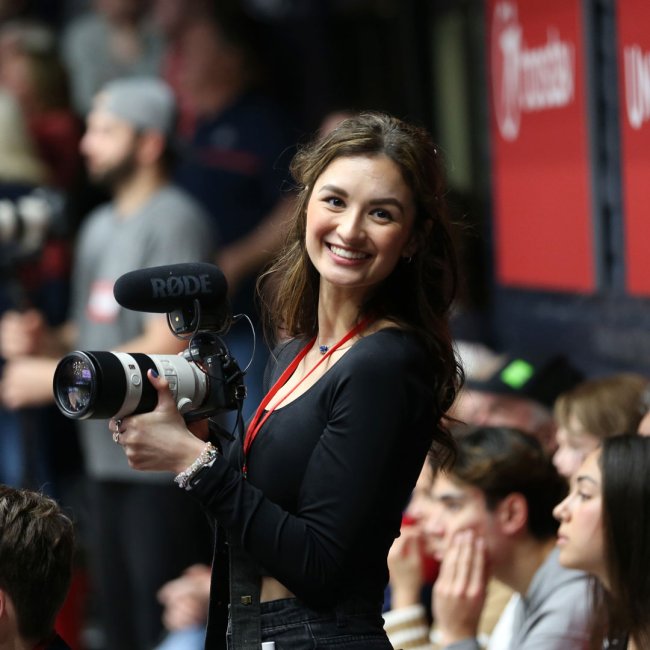
A student with a camera

Social Media Manager
Develop and implement content strategies that grow engagement and brand awareness across digital platforms

Broadcast or Production Assistant
Support the creation of television, film, or digital media projects through editing, scripting, and production coordination

Advertising or Marketing Specialist
Craft campaigns that combine creativity with data-driven strategy to reach target audiences effectively

Photographer or Videographer
Produce compelling visual media for news, entertainment, corporate, or social causes

Public Relations Professional
Shape and maintain a positive public image for clients through media relations, events, and communications planning

Journalist or Multimedia Reporter
Research and report stories for print, digital, or broadcast media, integrating visual and written storytelling

Event Planner or Communications Coordinator
Design and manage events or communication initiatives for companies, nonprofits, or government agencies

Media Analyst or Researcher
Evaluate media trends, audience behavior, and campaign effectiveness using research and analytical tools


Saint Mary's Testimonials

Carlos Torres

“Saint Mary’s played a huge part in my journey of developing my business. I went into Saint Mary’s as a transfer student from Los Medanos College and majored in Communication, knowing that I wanted to develop the skill sets needed to be a business owner. I also knew that if I could be a great communicator, I could be a great leader and if I were a great leader, I could run my own business."

Emmy Winner, Carlos Torres ’16

School and Department Information