
Chills and thrills: January Term 2026 found Gaels around the globe and on campus— which is where Katie Hayek ’27 went on a cinematic journey analyzing horror films in a class taught by Jason Jakaitis, director of the Media Production Program. / Photo by Jeremy Yap on Unsplash
Men, Women, and Chainsaws…Oh, My! A Jan Term Deep Dive into Horror Cinema
A reflection from Katie Hayek ’27, who spent January analyzing themes of gender and identity in films like “Psycho” and “Barbarian.” For Associate Professor Jason Jakaitis, the goal was to “help students look around at all media and take it seriously.”
For many college students, January is a time to reset, recalibrate, and ease into the spring semester. But for those of us enrolled in Men, Women, Chainsaws: Gender in Contemporary Horror Cinema, the month was a bit more, well…heart-pounding.
Each year, Saint Mary’s signature January Term Program gives students a chance to dive deep into one class of their choosing, on campus and around the world. This year, Gaels could be found designing board games, honing their farm-to-table culinary skills, or even snorkeling in the crystal waters of the Caribbean. I, on the other hand, was regularly found in the Student Media Center’s Screening Room, popcorn and candy in hand.
Guided by our truly fearless leader Jason Jakaitis, director of the Media Production Program, our class embarked on a cinematic journey together, exploring gender, sexuality, power, otherness, identity, and abjection within the horror genre. Each morning, Jakaitis introduced us to a new element of film theory or film production. Then, in the afternoon, we settled into screen horror classics like The Texas Chainsaw Massacre and Alien or newer offerings like The Babadook and Barbarian.
The films we watched day after day were terrifying and often morally challenging, testing our analytical skills as well as our stomachs. At the heart of the class, however, was a consideration of where men and women “belong” in horror. For instance, why does Ripley, played by Sigourney Weaver and one of two women in Alien, outlast her crewmembers and defeat the deadly extraterrestrial? And why does The Thing, made just three years after Alien, not feature any women at all?
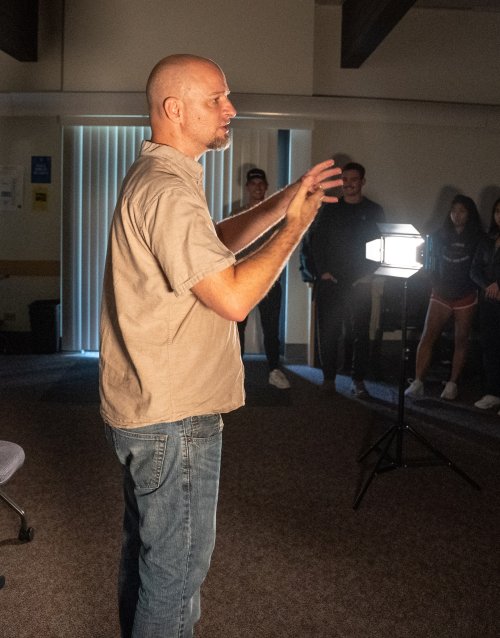
For Jakaitis, it was important that each film say something about identity and privilege. He also required that we watch the films as a class. “I knew I wanted it to be communal,” he said. “It's important to watch movies together, because at the end of the day, it is a social activity.”
Growing up, Jakaitis spent countless hours in movie theatres—a formative experience that is, he noted, rapidly vanishing in an age of accessible, on-demand content. “So many things that we used to experience collectively are going away,” he told me. “Horror films are a chance to experience an incredibly visceral kind of fun, and do so together.”
A spark in the dark
When piecing together the course (not unlike Dr. Victor Frankenstein himself), Jakaitis pulled from a number of sources: his own feminist film studies classes in graduate school; totemic films he thought students would enjoy; and recent films that have ushered in a new horror renaissance. Above all, he wanted movies that could be taken seriously—something that does not always happen with horror, he noted.
“This genre and other kinds of genres have historically been pooh-poohed and looked down on,” Jakaitis said. It’s why he uses film scholar Carol Clover’s seminal 1992 book, Men, Women, and Chainsaws, as the theoretical framework for the class. Clover argues that slasher films tend to include a “final girl”— a last-woman-standing who experiences abject terror before defeating the monster. “I like the way that Clover took this genre, which had been put in the trash, and said, ‘No, actually, this is really empowering. There are important things happening here.’”
After three weeks of watching horror films, I would agree. The class showed me that horror is able to provide escapism while also reflecting the fears and anxieties of the moment. It can also be, perhaps surprisingly, remarkably feminist. That was one major takeaway for Sophie Donahue ’28, a Kinesiology major enrolled in the course.
"I love that the longer Jan Term classes allow us to do deeper dives," says Jason Jakaitis. “A lot of the time, students are outside their disciplines...You get to be that first spark.”
“Horror is one of the only genres that is female-dominated,” Donahue told me. “I think it’s important to learn about gender and sexuality in horror because it’s a genre that allows for many metaphors around the ‘monsters’ that can attack.”
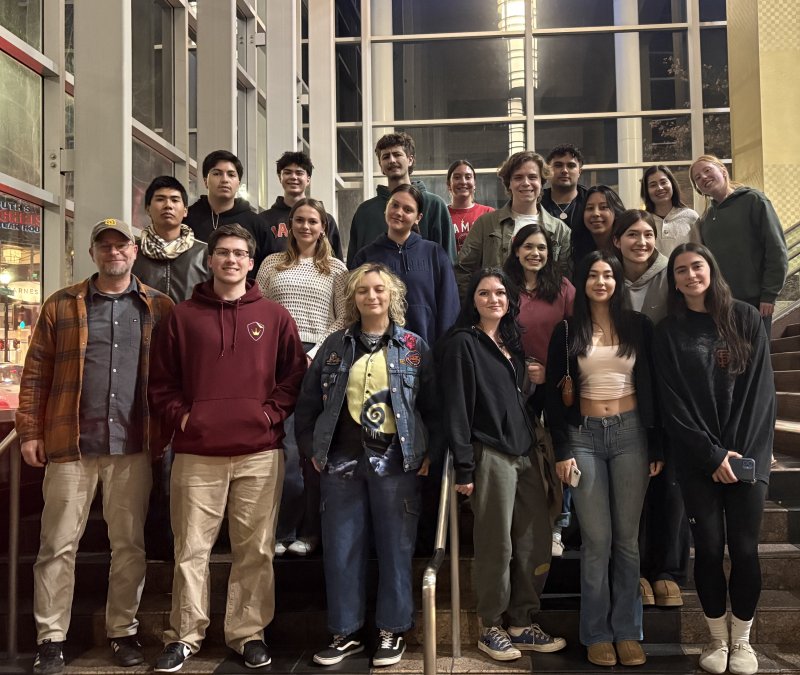
Those monsters can be external, like in Alien. They can also be internal, as in the recent I Saw the TV Glow, which grapples with the horror of denying one’s own identity. What intrigued me most was the interplay between identity and paranoia, as seen in The Thing and Barbarian. The commentary on the importance of human communication for survival—and the implications that gender can have on it—was also fascinating, and inspired many passionate discussions in class.
As Jan Term came to an end, Jakaitis’ goal was that we would come away with a different perspective on horror and popular culture in general. “I hope I can help students look around at all media and take it seriously,” he said. “In everything, even the most popular, popcorn stuff, there's cultural problem solving happening.”
Exploring topics like this, in this way, is what Jakaitis appreciates most about Jan Term. “I love that the longer classes allow us to do deeper dives,” he told me. “A lot of the time, students are outside their disciplines, so you have a chance to blow people's hair back. You get to be that first spark.”
Katie Hayek ’28 is a Student Writer with the Office of Marketing and Communication at Saint Mary’s.


