Public Health, BS

Public Health, BS

The Public Health Program offers a full range of courses designed to introduce undergraduate students to the core competencies of the public health discipline: Environmental Health, Epidemiology and Biostatistics, Health Policy and Management, and Social and Behavioral Sciences. The primary goals of the program are to prepare students for postgraduate study and/or careers in public health related subdisciplines.


Apply Today Request Info

Learn More About Our Public Health Program

Get to know our well-respected faculty and their specialties. Or explore scholarship opportunities and an array of research possibilities.

Curriculum

Public Health, BS

BS

The Public Health Program offers a full range of courses designed to introduce undergraduate students to the core competencies of the public health discipline: Environmental Health, Epidemiology and Biostatistics, Health Policy and Management, and Social and Behavioral Sciences. The primary goals of the program are to prepare students for postgraduate study and/or careers in public health related subdisciplines.

Learning Outcomes

  • PLO 1: EVALUATE how biological, physical and chemical environmental factors affect human health.
  • PLO 2: EXAMINE how behavioral, social, cultural, and ethical matters contribute to global and community public health issues.
  • PLO 3: DEVELOP and DELIVER public health programs through both a managerial and a policy perspective, using multi-mode communications considering sociocultural, historical, and ethical factors.
  • PLO 4: SOLVE problems in public health by applying statistical reasoning and methods to analyze and interpret data on diseases and injury within populations.

Requirements

Lower Division Biology

Take one course and its accompanying lab from this category

  • Intro to Biology for Human Hea (5 units)
  • Intro to Biology for Hlth Lab
  • Introductory Microbiology (4 units)
  • Introductory Microbiology Lab
  • Intro Cell & Molecular Bio (5 units)
  • Intro Cell & Molec Bio Lab
  • Intro Organisms and Evolution (5 units)
  • Intro Organisms & Evol Lab

Lower Division Chemistry

Take one course and its accompanying lab from this category

  • Survey of Chemistry (3 units)
  • Survey of Chemistry Lab (1 units)
  • General Chemistry I (4 units)
  • General Chemistry I Laboratory (1 units)

Lower-division Sociology

Take one course in Sociology

  • Social Problems (3 units)

Lower Division Core

Take the following lower-division required courses

  • Fundamentals of Nutrition (3 units)
  • Intro Probability & Statistics (3 units)
  • Introduction to Psychology (4 units)
  • Anatomy and Physiology I (4 units)
  • Anatomy and Physiology I Lab
  • Anatomy and Physiology II (4 units)
  • Anatomy and Physiology II Lab
  • Intro to Public Health (3 units)
  • Intro to Public Health EL (1 units)

Upper Division Core

Take the following required upper-division courses

  • Health Equity Program Plannin (4 units)
  • Multicultural Hlth & Wellness (4 units)
  • Writing in Healthcare Professi (3 units)
  • Epidemiology (4 units)

Environmental Health Elective

Take one upper-division course from this elective category

  • Environmental Problems (4 units)
  • Sustainability (4 units)
  • Environmental Health (4 units)
  • Environmental Justice (4 units)
  • Environmental Politics (3 units)
  • Envirmntl Law and Regulation (3 units)

Global Health Elective

Take one upper-division course from this elective category

  • Culture, Health & Healing (4 units)
  • Environment in Asian History (4 units)
  • Rsch Sem: Envir Dis Latin Am (3 units)
  • Global Impact of Phys Inactiv (3 units)
  • Global Migration (4 units)
  • Global Sociology (4 units)

Health Ethics and Advocacy Elective

Take one upper-division course from this elective category

  • Health Communication (4 units)
  • Community Health (4 units)
  • Medical Ethics (3 units)

Electives

Take at least 3 units of 200+ level courses

  • Food Politics (3 units)
  • Health Psychology (3 units)
  • Health and Illness (3 units)
  • Spanish for Health Care (3 units)

What can you do with a degree in Public Health?

A degree in Public Health provides students with skills in epidemiology, biostatistics, environmental health, and health policy to improve population well-being
(*Some careers may require additional certification or graduate study)
Image
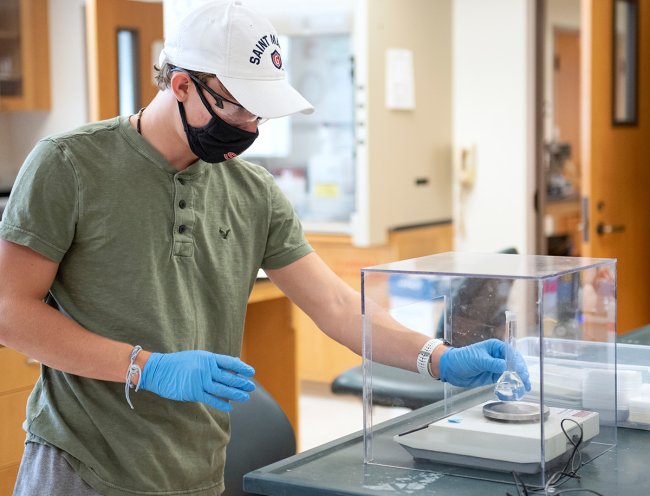
student works on science experiment

Epidemiology Assistant
Support surveillance and outbreak investigations by cleaning datasets, running basic analyses, and summarizing trends for action

Biostatistics Analyst (entry-level)
Apply statistical methods to public health data, generate dashboards and briefs, and inform program and policy decisions

Community Health Educator
Design, deliver, and evaluate culturally responsive workshops and campaigns that promote prevention and healthy behaviors

Program Coordinator (Health Promotion)
Plan interventions, manage partners and budgets, track KPIs, and report outcomes for grants and community initiatives

Environmental Health Specialist (trainee)
Conduct inspections and risk assessments, interpret regulations, and educate the public on water, food, air, and workplace hazards

Health Policy & Management Analyst
Research policies, map stakeholders, model costs and benefits, and draft recommendations for agencies or nonprofits

Global/Public Health Outreach Specialist
Coordinate field activities, collect and visualize data, and adapt evidence-based strategies to diverse populations

Health Communication Specialist
Translate complex findings into clear messages, toolkits, and media content to drive awareness and behavior change

Saint Mary's Testimonials

“My experience as a health science major has opened my eyes to the wide range of career opportunities in the health field. Most importantly, the courses were beneficial for my future goals because they provided me with the knowledge and inspiration to help others be the best and healthiest version of themselves.”

Alyssa Vessel, '22

School and Department Information